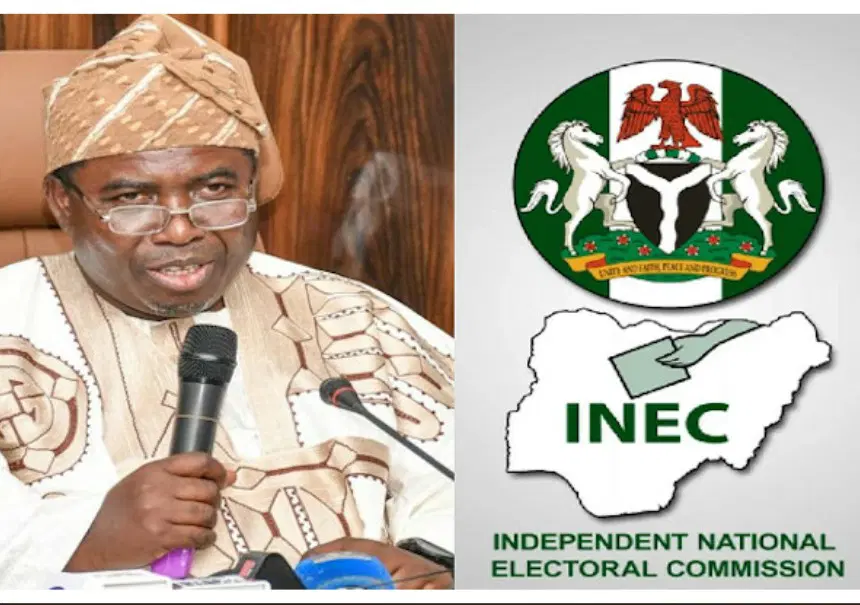
The Independent National Electoral Commission on Saturday released the names and particulars of governorship candidates and their running mates across the country.
The publication, contained in Form EC9, was pasted at INEC headquarters across the states, effectively ending uncertainty over candidates that will fly the flags of the major political parties in the country.
The All Progressives Congress, African Democratic Congress, Nigeria Democratic Congress, Peoples Democratic Party and Allied Peoples Movement dominated the lists, which contain the ages of candidates, their educational backgrounds and other credentials.
With the release, the commission has formally opened a new phase of the 2027 electoral process, with campaigns for the governorship and state House of Assembly elections expected to begin in September 2026 and end on February 4, 2027.
According to the INEC timetable, the 2027 governorship and state House of Assembly elections will hold on February 6.
According to Sunday PUNCH, ABNTV gathered that 16 candidates will contest the Oyo State governorship seat.
The APC candidate, Sharafadeen Alli, will battle Governor Seyi Makinde-backed Bimbo Adekambi of the Allied Peoples Movement and Yinusa Ayandare of the African Democratic Party.
In Lagos, 17 candidates, including the state’s current Deputy Governor, Obafemi Hamzat of the APC, and Gbadebo Rhodes-Vivour of the ADC, are contesting the governorship seat.
In Kaduna State, Governor Uba Sani of the APC will face 17 other contestants, while Kebbi State has 14 governorship candidates.
In Delta State, 16 candidates are battling for the state’s top political seat.
No fewer than 19 political parties will also participate in the Sokoto State governorship election.
In Kwara, 12 governorship candidates will participate in the election.
The Speaker of the Kwara State House of Assembly, Yakubu Danladi-Salihu, who is the candidate of the APC, will slug it out with the PDP candidate, Bolakale Kawu, and 10 others.
Similarly, Zamfara State Governor, Dauda Lawal, is being challenged by 15 other governorship candidates in the state.
For Bauchi State, 19 candidates were listed by INEC as individuals eyeing to succeed Governor Bala Muhammed.
Among the candidates is a female politician, Lami Babageidam of the Zenith Labour Party.
Also, Benue State Governor, Hyacinth Alia, will be contending with five other governorship candidates, including a former Attorney General and Minister of Justice, Michael Aondoakaa, SAN, of the Peoples Democratic Party.
In Kano, Governor Abba Yusuf of the APC will contest against the other governorship candidates, including that of the NDC, Aminu Gwarzo, the Labour Party’s Mohammed Raji, and the PDP’s Muhammad Dalhatu.
For Rivers State, 19 governorship candidates will participate in the election.
Meanwhile, no fewer than 17 governorship candidates have emerged in Gombe State as disclosed by INEC Public Affairs Officer, Mohorret Bigun.
In Ogun, 13 political parties fielded candidates for the governorship election.
The candidates include Solomon Adeola of the APC, Oladipupo Adebutu of the PDP, and Jimi Lawal of ADC.
Similarly, INEC unveiled 14 candidates for the Jigawa State governorship election.
For Ebonyi, Governor Francis Nwifuru will slug it out with the PDP governorship candidate, Ifeanyi Odii, and other contenders. Odii was Nwifuru’s major challenger in the 2023 governorship poll.
INEC to print sensitive election materials locally
Also, INEC said all sensitive materials to be used for the 2027 elections, including ballot papers and result sheets, will be printed locally.
The INEC National Commissioner, Mohammed Haruna, disclosed this during an interview with Sunday PUNCH on Saturday.
He stated that the commission had inspected local printing companies and was satisfied with their capacity and security arrangements to handle the production of sensitive election materials.
Haruna said the printing of ballot papers and result sheets would be done close to the elections because of their sensitive nature, while the materials would subsequently be delivered to the Central Bank of Nigeria for safekeeping and distribution.
“Everything is going to be printed locally. Sensitive materials, for us, are ballot papers and the result sheets, and we don’t print those ones early because they are sensitive.
“So, it’s fairly close to the election that we print and deliver them to CBN, and from there, they are normally collected and distributed in the presence of everybody, including civil society organisations, media, party agents,” he said.
The national commissioner said INEC had already commenced the procurement and production of non-sensitive election materials, including ballot boxes, as part of preparations for the 2027 polls.
He added that the commission had also placed orders for other critical election equipment, including the Bimodal Voter Accreditation System machines, while banners were being produced to meet anticipated shortfalls.