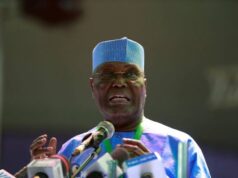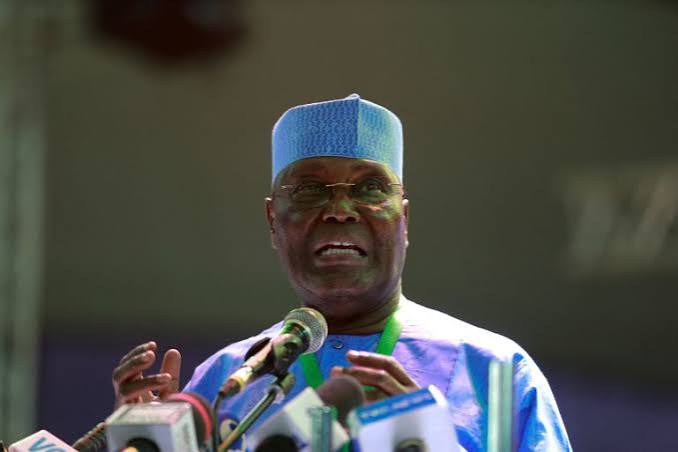
The African Democratic Congress presidential candidate in the 2027 election, Atiku Abubakar, on Thursday, came under vitriolic attacks over his plan to restore petrol subsidy if he wins the 2027 presidential election.
While the Presidency and the Organised Private Sector faulted the proposed policy reversal, the Nigeria Labour Congress was divided over Atiku’s plan to restore the petrol subsidy, which President Bola Tinubu removed during his inaugural address in May 2023.
Meanwhile, in the run-up to the 2023 presidential election, Atiku, then the Peoples Democratic Party candidate, had pledged to remove petrol subsidy within 100 days in office if he won the election.
Under his latest proposal contained in his Atiku Economic Recovery Plan 2027, the ex-vice president said his government would provide qualifying Nigerian refineries with crude oil at preferential prices, but only under strict conditions designed to ensure that the benefit reaches consumers.
He noted that the new petroleum subsidy model would shift government support from imported fuel to locally refined products.
In a statement signed by his Senior Special Assistant on Public Communication, Mr Phrank Shaibu, on Thursday, Atiku called for a detailed explanation of nearly N12tn in energy security expenses recorded by the Nigerian National Petroleum Company Limited in 2023 and 2024.
“My proposal is not to resurrect the old subsidy regime. We will move subsidy from importation to production, from middlemen to Nigerian refineries, and from unverifiable claims to verifiable barrels. The principle is simple: the subsidy will follow the barrel,” he said.
Atiku’s proposal comes against the backdrop of the consequences of the subsidy withdrawal, which had triggered a hike in transportation costs, subjecting millions of Nigerians to untold hardship as families struggle to afford basic needs.
Though the Federal Government has consistently defended it as necessary to prevent fiscal collapse and redirect public finance to infrastructure, education, healthcare and job creation, Nigerians have continued to contend with elevated petrol prices and the wider cost-of-living impact of the subsidy removal.
On Wednesday, the Minister of Finance and Coordinating Minister of the Economy, Taiwo Oyedele, disclosed that the removal of the subsidy and the liberalisation of the naira had generated N15.8tn in savings for the federation between June 2023 and December 2025.
But the ADC presidential flag-bearer argued that Nigeria’s experience since the removal of the subsidy demonstrated the need for a different approach—one that supports domestic production without creating an open-ended liability for the federation.
Under the AERP model, both public and private refineries that meet prescribed requirements would be eligible for preferential crude allocations. The allocation, according to Atiku, would be based on independently verified refining capacity, efficiency, domestic supply, production performance and regulatory compliance rather than political connections.
However, access to cheaper crude would come with a corresponding obligation.
According to the plan, a refinery receiving preferential crude would be required to refine it domestically and supply an agreed quantity of petroleum products to the Nigerian market under a transparent pricing formula reflecting the value of the crude concession.