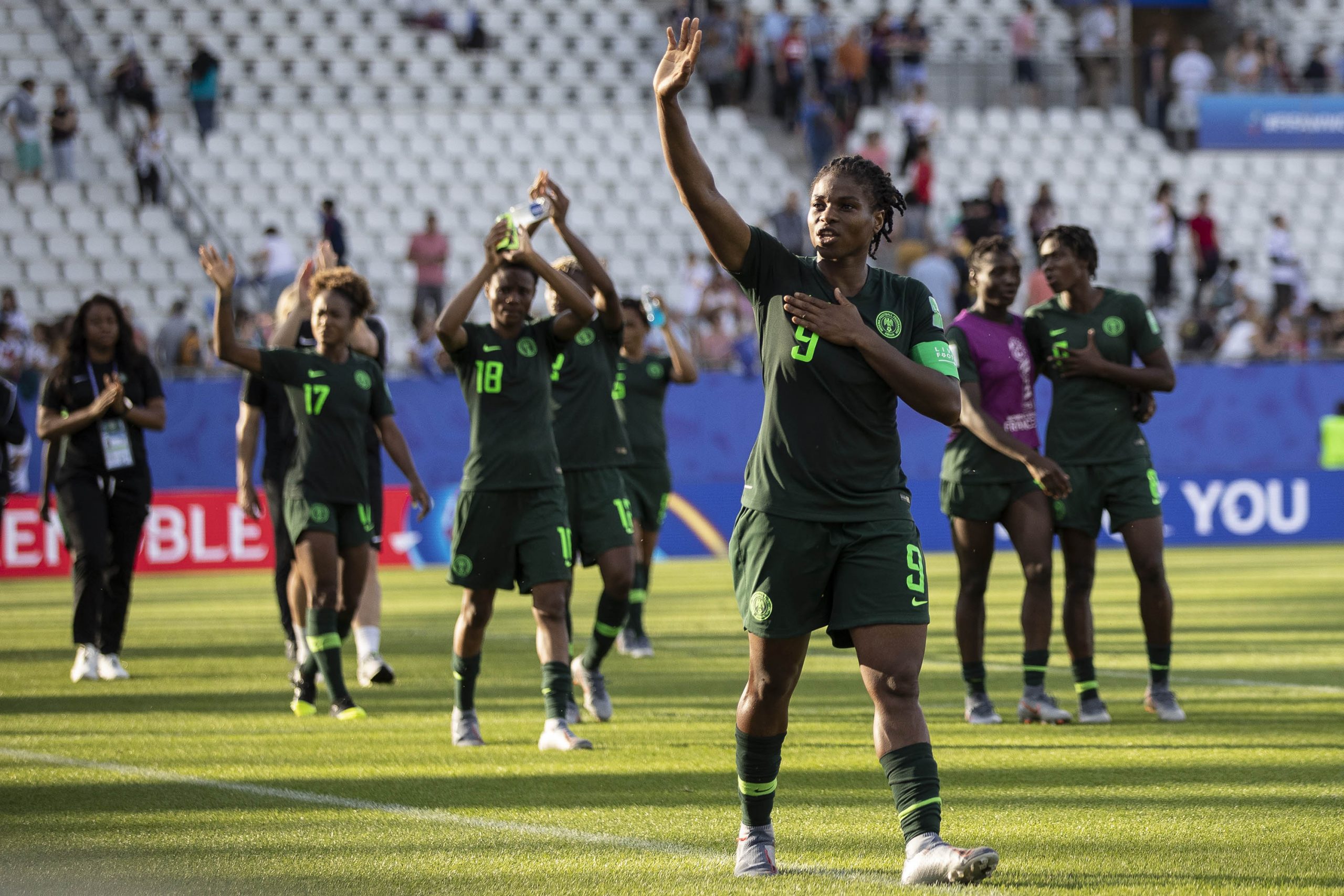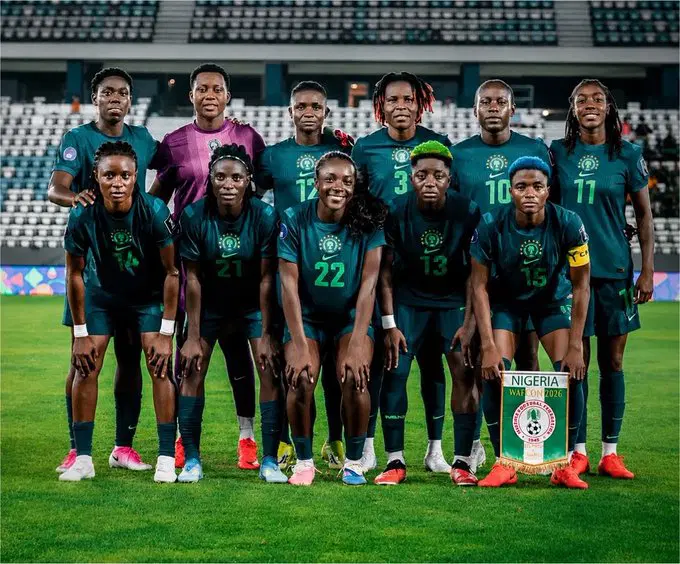
The Super Falcons’ quarter-final exit from the 2026 Women’s Africa Cup of Nations in Morocco is more than another painful sporting disappointment. It should be the moment Nigeria finally confronts the deep weaknesses in its football system and begin the difficult task of rebuilding. Nigeria’s 1-0 defeat by Cameroon ended the Falcons’ defence of their African title and denied them an automatic ticket to the 2027 FIFA Women’s World Cup in Brazil. The country still has a route to the tournament through the play-offs, but that should not disguise the seriousness of the setback. For a nation that has dominated African women’s football and won the continental championship 10 times, such a reversal is a warning that historic prestige can no longer compensate for institutional shortcomings.
For too long, Nigerian football has been administered through cycles of crisis, hurried preparations and short-term fixes. National teams attract intense attention only when major tournaments approach, while fundamental questions concerning coaching, scouting, player development, facilities, welfare, sports science and competitive domestic football remain inadequately addressed. The performance of a national team is ultimately a reflection of the ecosystem that produces its players. Nigeria has immense natural talent, but talent alone is no longer enough. Modern football demands systematic development from the grassroots through the professional level. The country’s age-grade teams have traditionally been important pipelines for the Super Falcons and Super Eagles. But winning youth competitions is not an end in itself.
The real test is whether promising players are developed into technically accomplished, physically prepared and tactically sophisticated senior internationals. This is where Nigeria must learn from countries such as Morocco, which have invested heavily in football infrastructure, coaching, youth development and institutional structures. African rivals are catching up because they are building systems while Nigeria continues to rely too heavily on individual brilliance and historical reputation. The Nigeria Football Federation (NFF) must therefore develop and implement a comprehensive national football development plan, with measurable targets for grassroots football, women’s football, age-grade competitions, coaching education, refereeing, scouting, sports medicine, sports science and the domestic leagues.
Women’s football deserves particular urgency. The Falcons’ remarkable record was built by successive generations of talented players. That dominance cannot be preserved merely by celebrating past achievements. It must be renewed through deliberate investment in the next generation. The failure of the Super Eagles to qualify for the 2026 men’s World Cup should already have provided this wake-up call. The Falcons’ latest setback demands an urgent response. Nigeria still possesses the talent, passion and enormous football following required to remain a global force. What it lacks is a coherent, accountable and modern structure capable of converting those assets into sustained excellence. The time for another temporary response is over. Nigerian football needs rebuilding. Let’s start now!