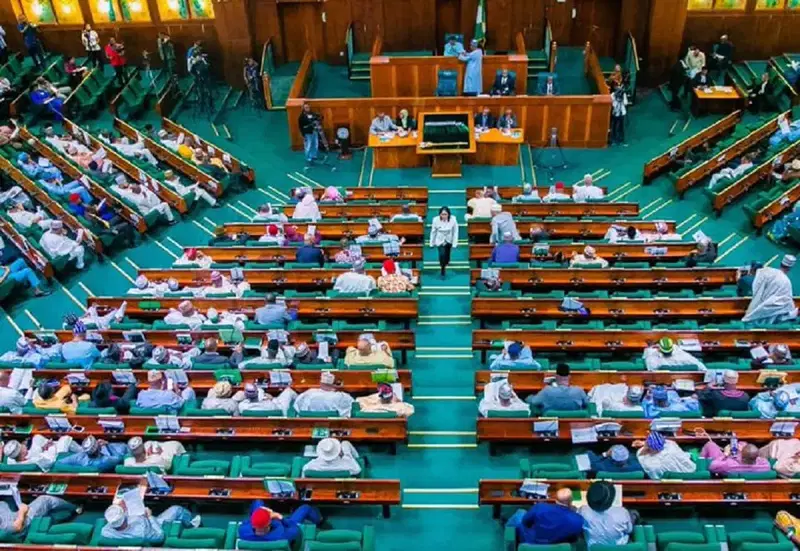
ABUJA — The House of Representatives yesterday resolved to investigate the human and economic losses suffered by Nigerians in recurring xenophobic attacks in South Africa, just as the President of the Nigerian Citizens Association in South Africa, NICASA, Mr Frank Onyekwelu, disclosed that South Africans are beginning to feel the economic consequences of attacks on foreign-owned businesses.
The House resolution followed the adoption of a motion sponsored by the member representing Ikorodu Federal Constituency, Lagos State, Mr Babajimi Benson, who called for a comprehensive assessment of casualties, property destruction and economic losses suffered by Nigerians over the years.
Moving the motion, Benson recalled Nigeria’s pivotal role in the anti-apartheid struggle, noting that the country committed substantial diplomatic, financial and political resources to South Africa’s liberation.
Despite that historic relationship, he lamented that Nigerians living lawfully in South Africa had remained targets of xenophobic violence for nearly two decades.
“Nigerians residing lawfully in the Republic of South Africa have, for nearly two decades, remained recurrent targets of xenophobic violence characterised by killings, mob attacks, physical assaults, arson, looting of businesses, destruction of properties, forced displacement, intimidation and hate campaigns principally directed at African migrants,” he said.
The lawmaker recalled major outbreaks of xenophobic violence in 2008, 2015, 2017, 2019 and 2021, which triggered diplomatic tensions and emergency evacuations of Nigerians.
He also expressed concern over renewed anti-foreigner campaigns by groups such as Operation Dudula, which have intensified fears among foreign nationals.
Meanwhile, speaking on Channels Television, NICASA President, Frank Onyekwelu, said the economic effects of attacks on foreign-owned businesses were beginning to impact South African communities.
“The reality is beginning to catch up with them. It’s one thing to demand that foreigners leave; it’s another to face the consequences afterwards. We have seen South Africans asking foreign business owners to return because they can no longer access affordable goods nearby.
“Businesses in many city centres have shut down, cash circulation has slowed, and commercial activity has declined significantly,” he said.
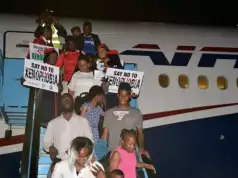
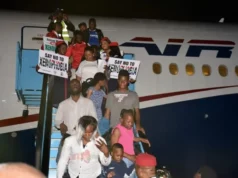
Onyekwelu said many Nigerians had lost homes, businesses and years of investment after fleeing for safety, adding that some were among the nearly 1,500 Nigerians evacuated from the country.
He revealed that the Nigerian Consulate in Johannesburg and the Nigerian High Commission in Pretoria had directed affected Nigerians to register their losses to facilitate documentation and future claims.
He cited a July 5 attack on a Nigerian-owned mechanic workshop in which more than 25 vehicles were reportedly destroyed by fire.
“Nigerians are being unfairly judged because of the actions of a few individuals. Nationality is not criminality,” he said.
Onyekwelu also accused some politicians of exploiting anti-foreigner sentiments for electoral gains, describing Nigerians as collateral victims of political campaigns.