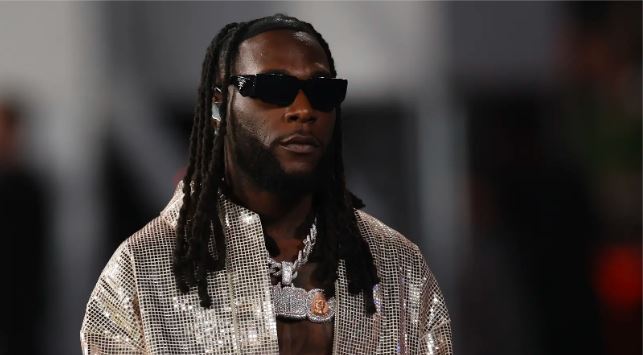
When FIFA announced Nigerian Afrofusion superstar Burna Boy as one of the lead artists for the official 2026 FIFA World Cup song, Dai Dai, alongside Shakira, it marked another defining moment in the Grammy winner’s international career. Beyond the prestige of representing Africa on football’s biggest stage, the collaboration has significantly strengthened Burna Boy’s global visibility, streaming performance and commercial appeal.
The impact was almost immediate.
Within weeks of the tournament kicking off, FIFA announced that the Official FIFA World Cup 2026 Album had surpassed 336 million streams across digital platforms. More significantly for Burna Boy, Dai Dai climbed to No. 10 on Spotify’s Global Top 50, placing him among the world’s most-streamed artists during the tournament. The song also ranked among the Top 20 most-discovered tracks on Shazam globally, highlighting its widespread appeal beyond football audiences.
The accompanying music video became another major success story. FIFA reported that the official World Cup album generated more than 364 million YouTube views, with Dai Dai emerging as the platform’s most-watched music video globally during the tournament’s opening week.
More significantly, Spotify data showed Burna Boy climbed past 40.7 million monthly listeners, narrowly edging Tems’ tally of about 40.6 million to reclaim the top spot among African artists, a position Tems has held since 2025. The feat is particularly noteworthy because the hierarchy looked very different only months ago.
In late 2025, Tems became Nigeria’s most-listened-to artist on Spotify, surpassing Burna Boy after enjoying massive streaming success from her debut album, high-profile collaborations and growing global recognition.
For Burna Boy, whose career has already been built on international collaborations and sold-out stadium concerts, the World Cup anthem introduced his music to millions of football fans who may not have previously followed Afrobeats. With the FIFA World Cup attracting billions of viewers worldwide, the exposure extended far beyond traditional music audiences.
Industry observers note that official World Cup songs often enjoy extraordinary longevity because they remain associated with one of the world’s biggest sporting spectacles long after the tournament ends. Previous anthems such as Waka Waka and The Cup of Life continue to attract millions of streams years after their release, suggesting Dai Dai could enjoy similar staying power.
The timing also aligns perfectly with Burna Boy’s broader international ambitions. Having already headlined iconic venues including London Stadium and Paris La Défense Arena, the FIFA collaboration further cements his position as one of Africa’s foremost global cultural ambassadors.
The World Cup exposure is also expected to boost his catalogue. Historically, artists featured on global sporting events experience increased streaming across their previous releases as new listeners explore their music. Burna Boy’s extensive catalogue—including hits such as Last Last, Ye, City Boys and Sittin’ on Top of the World—stands to benefit from the influx of new international listeners.
Commercially, the partnership reinforces Burna Boy’s value to global brands. Being selected by FIFA, one of the world’s most influential sporting organisations, further enhances his profile for endorsements, festival bookings and multinational collaborations.
Beyond streaming numbers, the collaboration carries symbolic significance. Burna Boy became one of the few African artists to play a central role in an official FIFA World Cup soundtrack, underscoring the growing influence of Afrobeats in global popular culture. His inclusion alongside Shakira, whose World Cup songs have become cultural landmarks, reflects the genre’s evolution from a regional sound into a dominant force in international music.
As FIFA described the success of its music programme, the World Cup became “a global music movement,” with fans around the world not only watching football but also streaming, sharing and celebrating its soundtrack.
Burna Boy was at the heart of that movement, demonstrating once again that African music has become an indispensable part of the global entertainment landscape.
Other Nigerian stars, Rema, Davido and Ayra Starr also feature on the official 18-song FIFA World Cup album with songs like “Goals,” “No Place Like Home,” and “Show me” respectively and their global visibility has tremendously improved.