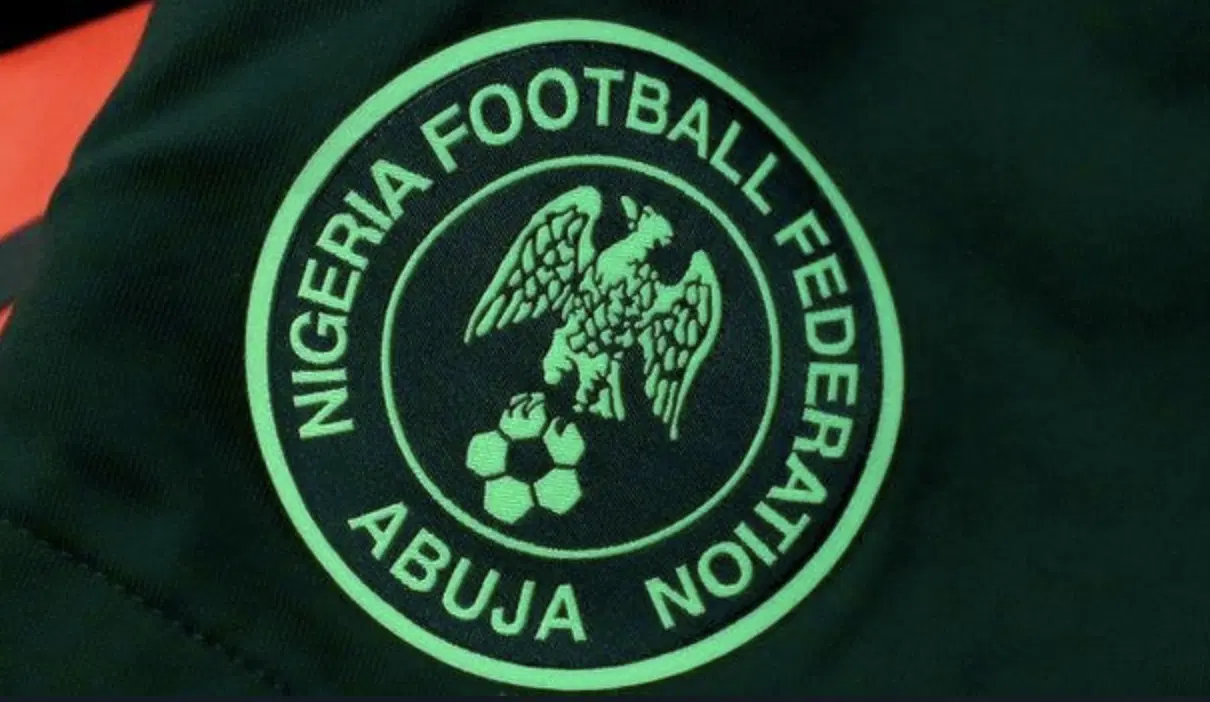
Failure to vote out NFF now will lead to another World Cup failure
• We must rid NFF of scavengers who have nothing to offer – Odegbami
*Football leaders resigned for qualification failure, not in Nigeria
*Govt’s indifference raises concern in Nigeria
The world has turned its eyes to the beautiful game of football as the Federation of International Football Asssociation, FIFA World Cup continues to generate interests from USA, Mexico and Canada, the three countries co-hosting the expanded World Cup of 48 national teams.
For billions of fans across the globe, the tournament represents the pinnacle of sporting competition — unity, passion, and fair play on the grandest stage.
For Nigerians, the World Cup will always carry a deeper resonance.
The Super Eagles’ inability to secure a spot at the global tournament has diminished the international marketability of Nigeria’s top talent and stunted the growth of the domestic game.
NFF must be overhauled, depoliticised – stakeholders, sporting icons
Stakeholders and sporting icons have repeatedly emphasised that until the NFF is overhauled and depoliticised, the country’s immense footballing talent will continue to waste.
The Nigeria Football Federation’s, NFF, chronic administrative and logistical incompetence is widely cited as the root cause of the Super Eagles’ consecutive failures to qualify for the FIFA World Cup. Pervasive mismanagement, delayed player bonuses, and chaotic coaching appointments have devastated the team’s momentum.
This failure represents something far deeper than poor performance on the pitch. It is the inevitable culmination of years of institutional rot, a systemic collapse engineered by a football federation that has perfected the art of self-sabotage.
From financial mismanagement and chronic player neglect to the abject decay of youth development structures, Nigerian football has been methodically stripped of its competitive edge by the very federation meant to nurture it.
Former Nigeria international, Segun Odegbami, who has become the lone voice in the wilderness has launched scathing criticisms on Nigerian football authorities, following the Super Eagles’ failure to qualify for the 2026 FIFA World Cup.
With the tournament continuing without Nigeria, Odegbami expressed frustration over what he described as an unacceptable situation for one of Africa’s biggest football nations.
“The government must act,” he insists.
He said that the government must act swiftly to remove dead woods from running Nigerian football as he noted that the incompetence of NFF officials is posing a threat to the one love and unity the country experiences when the Super Eagles are engaged in international competitions.
According to the former Green Eagles star, Nigeria’s absence from the World Cup should be a source of national concern which requires urgent attention from stakeholders.
“It’s not an Odegbami project, it’s a national call to save our football from the stranglehold of scavengers who have nothing to offer other than what they grab in the process. If people decide to peep from the window, I’ll go all the way,” Odegbami said.
‘Mathematical’, as he was fondly called in his hay days, said World Cup qualification should be considered a minimum expectation for a nation with Nigeria’s football pedigree.
Economically, Nigeria’s absence from the 2026 FIFA World Cup denied the Nigeria Football Federation, NFF, a guaranteed $10.5 million (over N15.5 billion) in direct FIFA prize and preparation funds.
The country also loses crucial sponsorship investments, global player marketability, and local economic revenue from tourism and broadcast subscriptions.
Participating nations in the expanded 48-team tournament are guaranteed at least $10.5 million, which represents up to 87 percent of NFF’s projected annual budget.
These ‘missing’ FIFA funds would have been deployed for grassroots development projects to build sustainable football infrastructure beyond the World Cup cycle.
SHAME: Only one stadium meets CAF, FIFA standards in Nigeria
It’s sad to note that in a country as big as Nigeria, there’s no stadium one can point at as a standard and functional stadium that meets the Confederation of African Football, CAF, and FIFA standards.
The Godswill Akpabio International Stadium (also known as Nest of Champions) in Uyo is fading away from its beauty and functionality because of over use.
Yet, there are over 30 stadiums scattered across the country, but decades of negligence and poor maintenance have left many unplayable.
For instance, despite being the commercial capital, Lagos struggles to host top-tier games because the National Stadium in Surulere is in a state of extreme disrepair, and the Teslim Balogun Stadium requires constant upkeep to maintain certification.
The massive funds from FIFA would have gone a long way in revitalising the stadiums if we had competent and accountable people in charge of football.
What was Italy government’s reaction after their national team, the Azurris, failed to qualify for the third World Cup?
The government of Italy responded to the national team’s playoff elimination by demanding a total overhaul of the country’s football federation. Sports Minister, Andrea Abodi, explicitly called for the resignation of Italian Football Federation, FIGC, president, Gabriele Gravina, while lawmakers demanded structural reforms and stricter limits on non-European Union, EU, players to help nurture domestic talent.
Abodi publicly stated that the FIGC President, Gabriele Gravina, should step down. Multiple lawmakers echoed this demand, stating that the leadership needed to be held accountable for the decline of Italian football.
Not in Nigeria. The government that shoulders most financial responsibilities of the NFF has kept mute, not even a word from it. No government statement as if they endorsed the failure, thus reminding us of the Latin legal maxim ‘qui tacet consentire videtur’, meaning “he who is silent appears to consent.”
The fellows at the Football House rolled their sleeves and tossed gullible Nigerians around with a petition challenging the eligibility of some Congolese players.
FIFA originally rejected the petition, but the NFF determined to toy with the hopes of Nigerians, appealed that decision, seeking to overturn the outcome of their 2026 World Cup playoff.
Yet, government did not respond, thereby heightening fears that the same government might be complicit in the affairs of NFF.
Former Sports Minister, Solomon Dalung said the problems undermining the country’s football development dated back decades and have remained largely unaddressed because of entrenched interests.
He narrated an encounter with an elderly man who told him that “in sports, we work harder for failure than for success.”
He said the man had also told him that tournament budgets were prepared up to the final stage, but noted that administrators benefit more financially when teams exit early because unspent funds are rarely accounted for.
He said this revelation proved true during his time in office, noting that attempts to demand accountability were often misrepresented as “ministerial interference.”
The deafening silence from those with the constitutional authority to checkmate corruption in the beautiful game that relieves pain and suffering of citizens has heightened fears that Nigeria may miss the next FIFA World Cup in 2030 to be jointly hosted in two continents by three countries (Morocco, Spain and Portugal) to celebrate the tournament’s centenary.
Government’s indifference since the Eagles failed to qualify for the World Cup has been interpreted to mean passive enablement, or a lack of accountability. It ebciurages the misfits in NFF who may lead Nigeria to another failure. They have clearly shown that they have nothing to offfer.
Reactions from governments whose teams even qualified for the World Cup but didn’t shine in the first round, have shown that the silence of Nigerian government over our back-to-back non-qualification is suspicious.
Saudi Arabia’s early FIFA World Cup exit prompted their federation chief to resign.
“The failure of the national team to qualify for the next round of the World Cup is a result that falls short of all our ambitions, and I bear full responsibility for it. I offer my apologies to everyone who hoped to see our team in a better position,” Yasser al-Misehal wrote before throwing in the towel.
“A sense of responsibility requires giving the opportunity to open a new chapter, and I have decided not to continue,” he added.
Saudi Arabia played in their third consecutive World Cup this year. They were among the seven Asian teams who were knocked out in the group stage as only Japan and Australia advanced to the round of 32.
Saudi Arabia has invested nearly $2billion in football over the past three years, luring Cristiano Ronaldo, Neymar and Karim Benzema to the Saudi Pro League, now one of the most lucrative competitions in the world.
The backlash over the team’s performance reached the highest levels and they decided to go for a clean sweep and introduce the spark of creativity in their football administration.
The Uruguayan Football Association, AUF, and government did not hide their anger and dissatisfaction with their team when they cancelled the national team’s scheduled private charter flight back from North America, following their disastrous group-stage elimination from the 2026 FIFA World Cup.
Instead, players and staff were left to arrange their own travel individually on commercial flights.
This is a typical government swift, decisive action that shows to whom much is given, much is expected.
In the case of South Korea, following their shock elimination from the group stage of the World Cup, President Lee Jae-myung publicly apologised to the nation and ordered the Ministry of Culture, Sports and Tourism to launch a full-scale government investigation into the Korea Football Association, KFA.
The government’s rapid intervention brought great relief to the people as they try to fashion a way of making progress with fresh and progressive minds.
The country’s leader said he felt “not just confusion but utter bewilderment at the unexpected outcome,” adding that the early exit “appears to be a failure of organisation and personnel.”
The government rebuked the football authorities and took prompt actions. Keeping quiet like the Nigerian government has done could imply consent.
That is why when the Minister of the Federal Capital Territory, FCT, Nyesom Wike, expressed frustration over Nigeria’s absence from the tournament, Nigerian football fans hailed him for speaking out.
He remains the only cabinet minister who has expressed angst over the management of football in the country.
Wike, who spoke at the commissioning of the Gwagwalada-Kuje Road project, where ex-Super Eagles’ captain, Joseph Yobo, was among dignitaries, expressed sadness over Nigeria’s failure to feature at the World Cup.
The minister said that despite Nigeria’s credentials and the number of players of Nigerian heritage featuring at the World Cup, not seeing the Super Eagles play on the biggest stage was hard to accept.
“Yobo, go and tell them. We are not happy,” Wike said.
Nigeria failed to reach a second consecutive World Cup tournament after losing to DR Congo in the African playoff tournament last year.
The Super Eagles, who first featured in the competition in 1994, made the play-offs after losing the direct ticket to South Africa, despite beating neighbours, Benin Republic, 4-0 in the final match of the qualification series.
Legendary Odegbami vowed that he would not let the sleeping dog lie until government comes out of its shell to “chase out those who have long overstayed at the football house and breathe new life to reposition football for the betterment of the game.” He wants them
voted out in the next elections. Like many Nigerians, he is calling for change of the NFF statutes so that those on board now can be legitimately voted out.
Chikelue Iloenyosi, FA Chairman of Anambra State, has urged ex-internationals to go into football politics to be able to have a say in Nigeria’s football governance.
Another ex-international, Austin Popo, did not agree less, saying “this is the time for us to close ranks and save Nigerian football.’’
It’s not all gloom.
For Nigeria to avoid missing a third consecutive FIFA World Cup, the time to act is now. We must move beyond rhetoric and embrace meaningful reforms.
Football administration must be driven by competence, accountability and transparency, rather than politics and personal interests.
The government, stakeholders and the football community must work together to restore integrity to the game and rebuild the structures that once made Nigeria a football powerhouse.
Failure to act decisively today could see the Super Eagles absent from yet another World Cup in 2030, a prospect that should concern every Nigerian who believes in the unifying power of football.