There is a haunting irony in the scandal now swirling around the Presidency over the alleged allocation of public funds to a non-existing government agency. Before Bola Ahmed Tinubu became president, he was unsparing in his attacks on the Peoples Democratic Party, PDP, over corruption, waste, falsehood and what he repeatedly described as the abuse of public trust.
Now, the same words he once fired at the PDP have returned to confront his own Presidency.
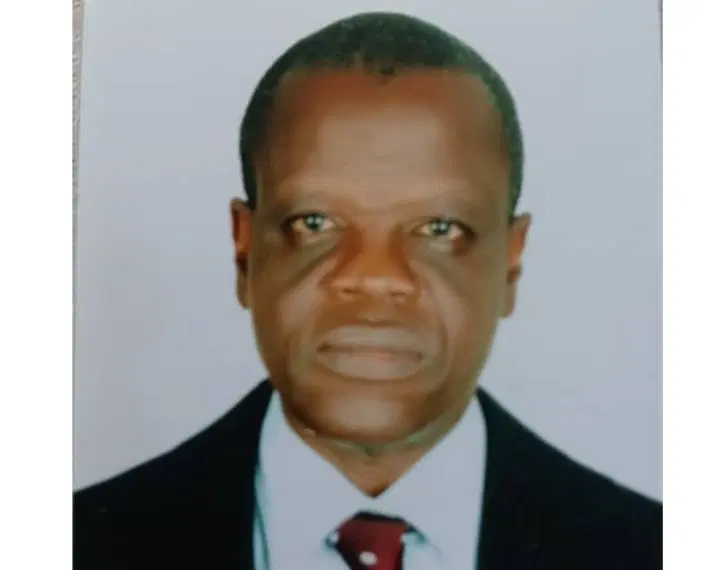
The controversy over the disputed Presidential Foreign Intervention Promotion Council, PFIPC, is not an ordinary scandal. The Presidency says the agency does not exist. It says Prince Adeniyi Adeyemi allegedly forged documents, impersonated officials and falsely paraded himself as Director-General of the supposed body. Presidential spokesman, Bayo Onanuga, has also said the Chief of Staff to the President, Femi Gbajabiamila, petitioned security agencies after allegedly discovering forged documents bearing his signature.
The real question Nigerians are asking is simple: if the agency does not exist, how did it reportedly find its way into official budget documents? Who processed it? Who cleared it? Who presented it? Who defended it? Who failed to detect it before the budget was passed? A fake agency may begin with one alleged fraudster, but it cannot walk through the budget process without the failure, negligence or complicity of real officials.
That is why this matter cannot be closed by a press statement.
Tinubu should understand this better than most. In 2018, when the PDP apologised to Nigerians for mistakes made during its years in power, Tinubu rejected the apology outright. Speaking at his 66th birthday colloquium, he urged Nigerians not to accept the apology, saying: “Don’t take their apologies. They lied, they falsified, they changed figures.” He added that for 16 years, the PDP made “fake promises” and then asked Nigerians not to talk about it.
That line is relevant today. If Tinubu once insisted that Nigerians must not keep quiet when figures were allegedly falsified, then Nigerians cannot be expected to keep quiet when a disputed agency allegedly appears in a national budget. If he once mocked a party for “changing figures,” he cannot now preside over a government where budgetary figures around a non-existing agency are left unexplained.
Tinubu was even more direct in another attack on the PDP. Vanguard reported him on March 29, 2018 as saying: “You looted, you wasted our money. We will keep talking about it.” He accused the former ruling party of wasting national resources when production was at its maximum.
The point is not that Tinubu is personally guilty of the present scandal. The point is that he set a standard. He said Nigerians must keep talking about public waste. He said corruption must not be buried under political apologies. He said falsehood in public finance must be exposed. That standard must now apply inside his own government.
In December 2018, while campaigning for the APC, Tinubu again attacked the PDP, declaring that Nigeria would not return to what he called the years of a “wasteful, corrupt economy.”
Those words now demand a presidential response beyond denial. If a non-existing agency was reportedly allocated funds, then what Nigerians are witnessing is not merely embarrassment. It is a direct assault on budget integrity. It suggests that the national budget may be vulnerable to manipulation by insiders, impostors or shadowy interests. That is a national security and governance problem.
The Presidency has tried to narrow the issue to forgery. But forgery is only one part of the story. Even if Adeyemi forged documents, who accepted them? Even if he impersonated officials, who interacted with him? Even if he misled people, which offices failed to verify his claims? If a false agency got into the budget, who opened the gate?
The Chief of Staff’s office must therefore go beyond saying it petitioned security agencies. It must provide a clear timeline. When did it first become aware of the disputed agency? When was the alleged forgery detected? Which documents were forged? Were any government officials deceived? Did any official correspondence pass through the Presidency, Budget Office, Ministry of Finance, Office of the Accountant-General, Office of the Secretary to the Government of the Federation or National Assembly committees?
These are not opposition questions. They are governance questions.
The Budget Office must explain how the disputed agency allegedly entered the budget. The National Assembly committees responsible for appropriation must explain whether they saw, reviewed or approved the item. The Ministry of Finance and Accountant-General’s office must clarify whether any account, payment process or release request was ever tied to the body. The anti-corruption agencies must tell Nigerians whether any public officer is under investigation.
Tinubu once told Nigerians not to accept political excuses from the PDP. He must not now ask Nigerians to accept a press statement as closure. He once said, “We will keep talking about it.” Nigerians are now talking about this one.
The cleanest way out is full disclosure. President Tinubu should order a public inter-agency investigation and release its findings. Anyone who inserted, processed, defended or failed to detect the disputed agency in official records should be exposed and sanctioned.
The PFIPC scandal is a test of whether Tinubu’s anti-corruption rhetoric was a principle or merely a campaign weapon. If he meant what he said about PDP-era waste, lies and falsified figures, then he must prove it now by applying the same fire to his own house.