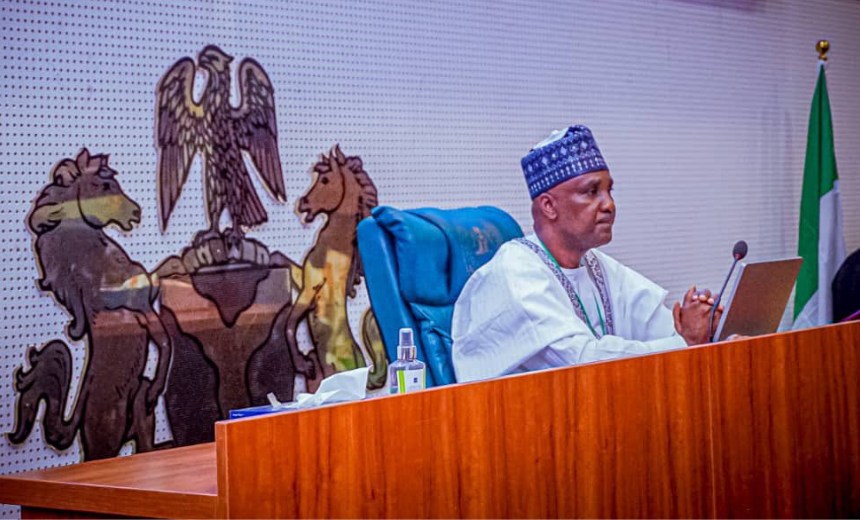
The Speaker of the House of Representatives, Tajudeen Abbas, on Monday said Nigeria cannot achieve its ambition of becoming a $1 trillion economy without a modern and credible statistical system.
The declaration is coming against the backdrop of the commencement of consultations by the National Assembly on a bill seeking a comprehensive overhaul of the country’s statistics framework.
Speaking at a public hearing on the Statistics Bill, 2025, Abbas said the proposed legislation would replace the Statistics Act of 2007 with a new legal framework designed to strengthen the National Bureau of Statistics, improve data governance, guarantee sustainable funding, and align Nigeria’s statistical architecture with the realities of the digital age.
The Speaker described the 2007 law as a product of a different era, arguing that rapid technological changes and the growing importance of data-driven governance have rendered many aspects of the existing framework inadequate.
Represented by the House Leader, Prof Julius Ihonvbere, at the event, which was held at the National Assembly Complex, Abuja, Abbas highlighted the importance of reliable data to national planning.
He said, “To plan without accurate data is to build a house on quicksand. For Nigeria to achieve its goal of becoming a $1tn economy, every policy decision, budget allocation, and infrastructural investment must be guided by data that is accurate, timely, and beyond reproach.”
The proposed legislation titled “A Bill for an Act to Repeal the Statistics Act No. 9, 2007 and Enact the Statistics Bill, 2025,” seeks to modernise the National Statistical System by strengthening coordination among government data-producing agencies, improving data quality assurance mechanisms, promoting digital data collection and dissemination, and establishing a more reliable funding structure for the NBS.
Abbas stressed that the legislation represents more than a routine amendment, describing it as a “complete structural overhaul” intended to reposition Nigeria’s statistical institutions for the demands of the 21st century.
According to him, when the current law was enacted nearly two decades ago, technologies such as artificial intelligence, big data analytics, cloud computing and digital platforms were either emerging or largely absent from mainstream governance and economic planning.
However, governments, businesses and development institutions rely heavily on real-time data to make critical decisions.
He noted that reliable statistics have become indispensable for policy formulation, resource allocation, monitoring and evaluation, poverty reduction strategies, economic planning and the implementation of the Sustainable Development Goals.
The Speaker also highlighted the growing need to eliminate duplication in government data collection efforts, saying a more coordinated statistical system would save public resources, reduce survey fatigue among citizens and businesses, and improve confidence in official data.
“We need a system that inspires absolute trust, whether an investor looks at our numbers in Abuja, London or New York,” he said.
The proposed legislation comes at a time when governments around the world are investing heavily in digital statistical systems to improve evidence-based policymaking. International development agencies have repeatedly emphasised the importance of strong national statistical institutions in measuring economic performance, tracking development indicators and attracting investment.