The Presidency has said the recent upgrade of Nigeria’s sovereign credit rating by S&P Global Ratings reflects the impact of economic reforms introduced by President Bola Tinubu’s administration since 2023.
In a statement issued on Saturday by the Special Assistant to the President on Social Media, Dada Olusegun, said the development signals growing confidence in the country’s economic direction.
“Beyond the global increase in oil prices, S&P’s eventual upgrade of Nigeria’s credit rating, for the first time since 2012, reiterates the resilience and commitment of the current administration to holistically reset the trajectory of our nation’s economy, without being distracted by its adversaries,” the statement said.
The Presidency said S&P attributed the upgrade to increased oil production, tax reforms, fuel subsidy removal, foreign exchange liberalisation, improved local refining capacity and the implementation of Executive Order 9 on petroleum revenue management.
According to the statement, Nigeria has recorded “a drastic improvement in oil production between 2023 and the present through enhanced security measures and strategic investments.”
It added that fiscal reforms are expected to reduce the country’s debt-to-revenue ratio to 338 percent in 2026, down from about 500 percent in 2023.
The statement further noted that sustained policy measures, including subsidy removal and FX liberalization, were central to the improved outlook.
It said, “Nigeria’s current account surplus is expected to grow to 5.8% of GDP in 2026, up from 4.8% in 2025.”
It also projected that inflation would average 17.7 per cent in 2026 before easing below 10 per cent by 2028.
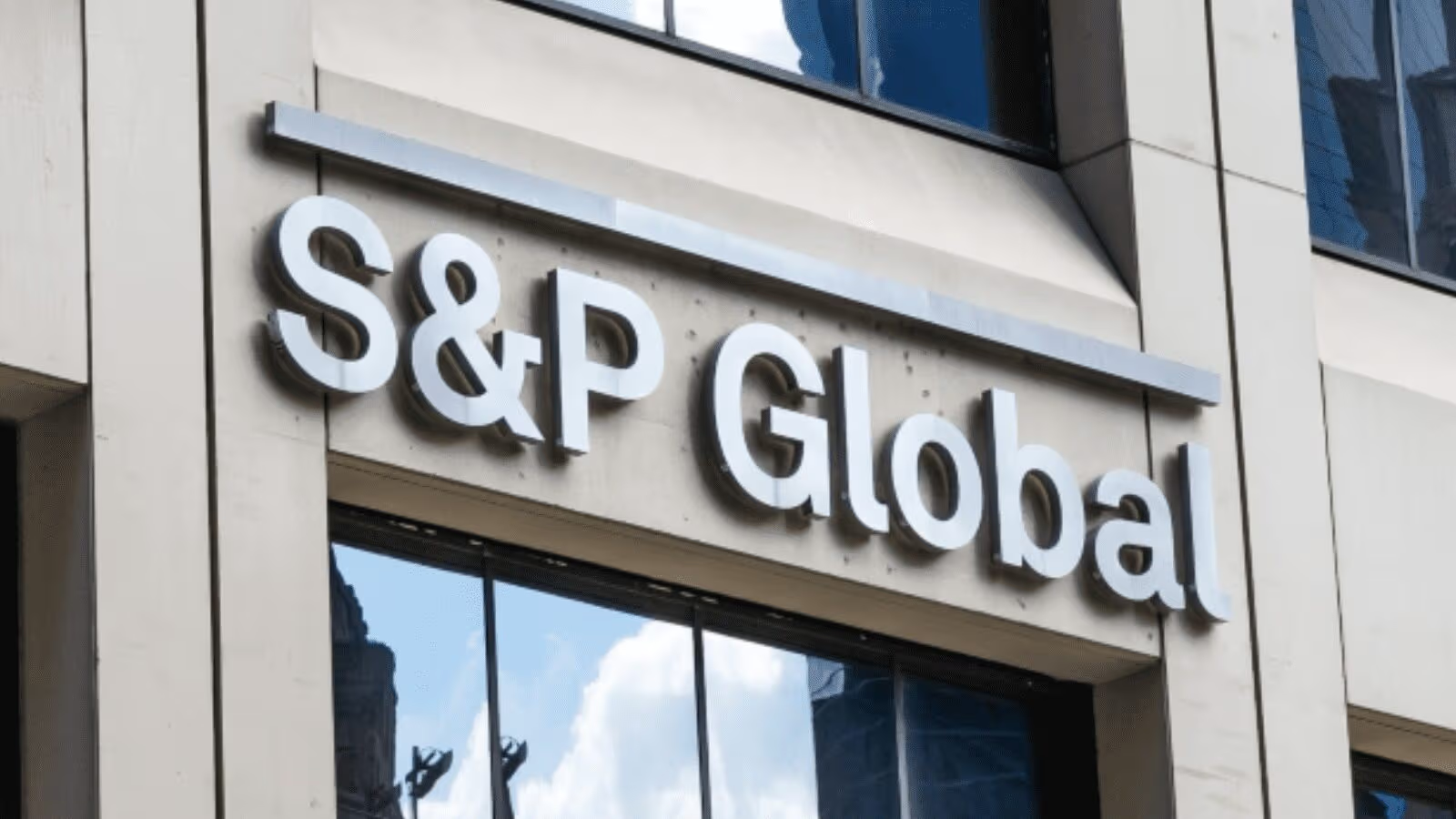
S&P Global Ratings on Friday upgraded Nigeria’s long-term foreign and local currency sovereign credit ratings to “B” from “B-”, while affirming a stable outlook.
The agency said the decision followed three years of structural reforms that improved Nigeria’s macroeconomic profile, external position and investor confidence, particularly through exchange rate liberalisation.
However, it warned that rising fuel prices driven by global oil market tensions could sustain inflationary pressure ahead of the 2027 general elections.
Reacting, the Minister of Finance and Coordinating Minister of the Economy, Taiwo Oyedele, said the upgrade reflects sustained investor confidence, noting that it follows similar improvements by Fitch Ratings and Moody’s in 2025.
The ratings agency said the outlook remains stable but dependent on the continuation of reforms amid structural challenges such as poverty, unemployment, insecurity and low revenue generation.