US President Donald Trump has said the ongoing war involving Iran could come to an end within “two weeks, maybe three,” while indicating that other countries may be responsible for securing the strategic Strait of Hormuz.
The White House also announced that Trump will address the nation at 9:00 pm on Wednesday (0100 GMT Thursday) to provide what it described as an important update on Iran.
The remarks come amid widening geopolitical tensions. Israeli Prime Minister Benjamin Netanyahu said the joint military campaign against Iran had “changed the face of the Middle East,” while Iranian President Masoud Pezeshkian stated that Tehran is willing to end the war if guarantees are provided that hostilities will not resume.
In Lebanon, the health ministry reported seven deaths following Israeli strikes in the south of Beirut and nearby areas. The Israeli military said it targeted a senior Hezbollah commander as part of its ongoing operations.
The conflict has reportedly caused significant casualties and displacement in Lebanon, with more than a million people affected, according to health authorities.
Financial markets reacted positively to reports of a possible resolution, with US stocks rising and Brent crude oil falling 3.2% to $103.97 per barrel. Asian markets also surged, with Japan’s Nikkei and South Korea’s Kospi posting strong gains.
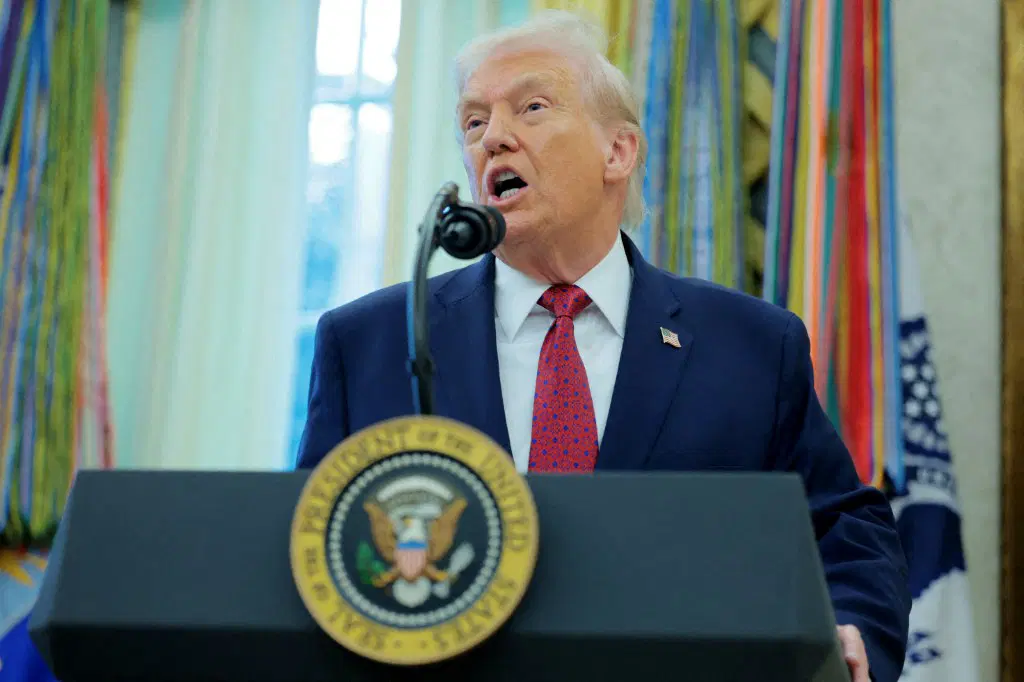
Speaking from the Oval Office, Trump said the United States could withdraw from the conflict “very soon,” possibly within a few weeks, adding that negotiations remain possible even as military operations continue.
He also warned that the US would not take responsibility for securing the Strait of Hormuz, urging countries such as France and China to handle their own shipping interests in the region.
In a social media post, Trump criticized NATO allies and other nations for not supporting US efforts, stating that Iran had been “essentially decimated” and calling on countries to “get your own oil.”
Meanwhile, Israeli Prime Minister Netanyahu vowed to continue military pressure on Tehran, saying Israel’s actions had “changed the face of the Middle East.”
Iranian officials, however, maintained that communication channels with the US remain indirect, with Foreign Minister Abbas Araghchi stating that messages are still being exchanged without formal negotiations.
As tensions persist, global leaders continue to monitor the situation closely amid fears of further escalation and broader regional instability.