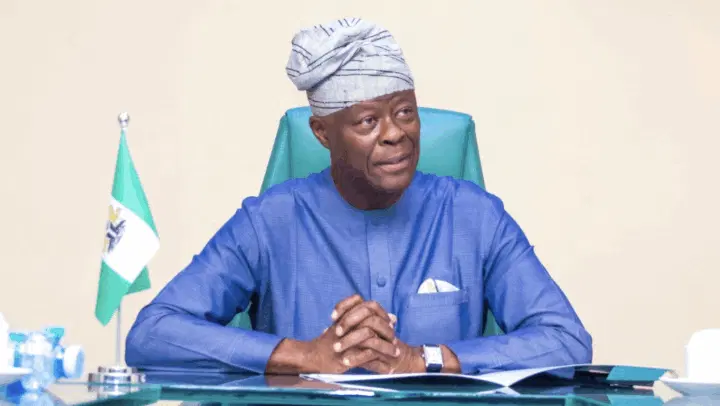
Nigeria’s Minister of Finance and Coordinating Minister of the Economy, Olawale Edun, has called for urgent action to curb the estimated $88 billion lost annually to illicit financial flows (IFFs) across Africa.
Speaking at the 5th Sub-Committee on Tax and IFFs of the African Union Specialized Technical Committee on Finance, Monetary Affairs, Economic Planning and Integration in Abuja, Edun warned that these illegal outflows continue to drain resources needed for critical development.
He described the moment as pivotal, stressing that Africa must reverse the steady movement of funds leaving the continent. According to him, the losses significantly weaken the capacity of governments to fund essential economic and social programs.
Edun further highlighted a troubling imbalance, noting that many African countries now spend more on debt servicing than they receive in Overseas Development Assistance and Foreign Direct Investment combined.
With a population of about 1.4 billion and vast natural resources, he said Africa has the potential for rapid, inclusive growth—but only if it strengthens domestic resource mobilization through effective tax and fiscal reforms.
Referencing Agenda 2063, Edun emphasized that the continent must aim to finance up to 90% of its development needs internally, rather than relying heavily on debt and foreign aid.
He outlined key priorities, including improving tax systems, maximizing natural resource revenues, boosting savings and financial inclusion, developing capital markets, strengthening governance, embracing digital reforms, and tackling illicit financial flows head-on. He also pointed to Nigeria’s National Single Window project as a step toward easing trade, reducing costs, and increasing government revenue.
In his remarks, Zacch Adedeji, Executive Chairman of the Nigerian Revenue Service, described illicit financial flows as one of Africa’s most pressing economic challenges. He noted that billions of dollars are lost annually through illegal transfers, trade mispricing, tax evasion, and opaque corporate structures.
Adedeji stressed that tackling the issue requires coordinated efforts across countries, adding that stronger continental collaboration is key to protecting Africa’s resources and building more resilient economies.