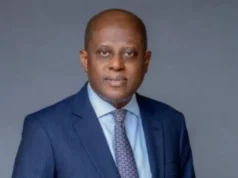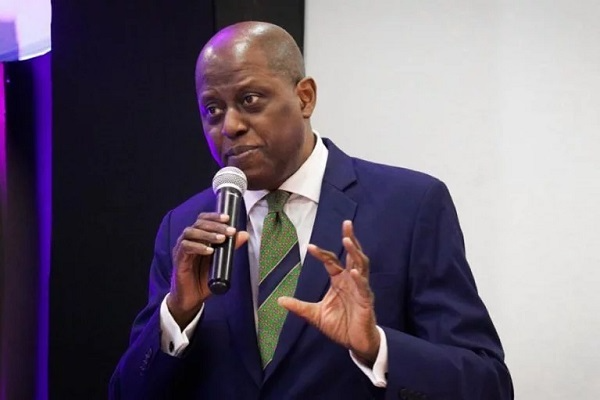
The governor of the Central Bank of Nigeria (CBN), Olayemi Cardoso, on Thursday declared that the era of persistent naira devaluation is over, saying the country’s ongoing monetary and foreign exchange reforms have restored confidence in the currency and strengthened the financial system.
“These reforms have restored pride in our currency and strengthened confidence in our financial system,” Cardoso said.
He spoke while delivering a keynote address at the Annual Distinguished Alumni Lecture held in celebration of Founders’ Day of the St. Gregory’s College Old Boys Association in Lagos.
Cardoso explained that the CBN remains focused on restoring price stability and bringing inflation down to single digits, noting that although the objective will take time to achieve, it remains central to the apex bank’s policy direction.
“Our goal remains to bring inflation down to single digits. This cannot happen overnight. External shocks will continue to occur and global developments will always have some impact. But inflation is effectively a tax, and it disproportionately affects the most vulnerable members of society,” he said.
“That is why restoring price stability remains a central objective.”
He noted that the bank’s commitment to transparency and well-governed markets is evident in the reforms carried out in the foreign exchange market, including the elimination of the multiple exchange rate system that previously benefited only a few.
According to him, although some critics argue that the exchange rate appears higher today than it was before the reforms, the key difference lies in accessibility and transparency.
“Some critics argue that the exchange rate today appears higher than it was before the reforms. My response is simple: when the official rate was lower, how many people could actually access foreign exchange at that rate? The answer, in most cases, was very few,” he said.
“Today, the situation is fundamentally different. Foreign exchange is accessible through formal channels, and the system is far more transparent.”
He explained that many Nigerians travelling abroad can now use their naira cards directly instead of searching for foreign currency through informal channels, a development he said represents a major improvement compared to previous years when travellers struggled to access foreign exchange.
Cardoso further revealed that the premium between the official and parallel markets has narrowed sharply from around 50 percent in 2022 to less than 2 percent on average in 2025, reflecting improved liquidity and efficiency in the foreign exchange market.
“There was a time when the Central Bank had to intervene constantly just to keep the market functioning. Without those interventions, little activity occurred. That situation is no longer the case,” he said.
“Today, the market functions more independently, with the Central Bank intervening only when necessary.”
He also disclosed that Nigeria has recorded nearly a 200 percent increase in capital inflows between 2023 and 2025, while the country’s external reserves have recently exceeded $50 billion, the highest level in more than 13 years.
“These developments are not accidental. They are the result of deliberate efforts to rebuild trust and strengthen the confidence of both domestic and international investors,” he said.
Cardoso noted that strengthening the capital base of banks and improving transparency in financial markets are critical to building a resilient economy capable of withstanding external shocks.
“Investors do not place their money in markets where transparency is absent or where a privileged few possess information unavailable to others. Confidence thrives in environments defined by fairness, discipline and credible institutions,” he said.
He added that strong institutional foundations remain essential for economic stability, particularly at a time when the global economy is facing renewed uncertainty arising from geopolitical tensions and recent developments involving the United States, Israel and Iran.
According to him, such developments could disrupt supply chains, increase energy prices and heighten risk aversion among global investors.
However, he maintained that Nigeria is now better positioned to withstand such shocks due to the macroeconomic reforms implemented over the past two years.
“Storms may come, but our house will stand firm,” he said.
Cardoso also highlighted the growing role of innovation and technology in shaping the future of finance, noting that Nigeria now hosts one of the world’s most dynamic fintech ecosystems.
He said digital payments, mobile banking platforms and financial technology innovations are expanding financial inclusion to millions of previously underserved Nigerians, while young entrepreneurs continue to build new businesses powered by technology.
Technology, he added, is enabling faster payments, more efficient lending and broader access to investment opportunities.
The CBN governor noted that the Central Bank is actively engaging the fintech ecosystem and has begun establishing clear guidelines covering areas such as Know-Your-Customer compliance and operational risk management.
“These frameworks are not barriers to innovation. They are the infrastructure that allows innovation to scale sustainably,” he said.
“Just as capital buffers protect banks, regulatory frameworks protect the integrity of the broader financial ecosystem.”
According to him, by combining innovation with discipline, technology with integrity and opportunity with responsibility, Nigeria’s financial system can continue to evolve and thrive in the digital age.