President Donald Trump said Monday that US military operations in Iran would be ending soon, reassuring markets that have been thrust into chaos by a war still reverberating across the Middle East.
The war had sent stock markets slumping and oil prices soaring on Monday as Tehran, under new leader Mojtaba Khamenei, fired a fresh barrage of missiles at its Gulf neighbours and signaled that the strategic Strait of Hormuz would likely remain closed.
But Wall Street climbed into positive territory on Trump’s signals of a short war, with Tokyo and Seoul also opening strongly Tuesday, despite the president’s continued threats to expand the campaign if Iran did not fall in line.
Oil prices also reversed course, falling as much as five percent a day after benchmark crude rocketed past $100 a barrel — its highest level since Russia’s invasion of Ukraine in 2022.
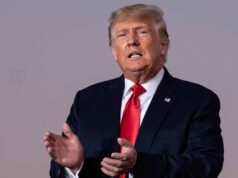
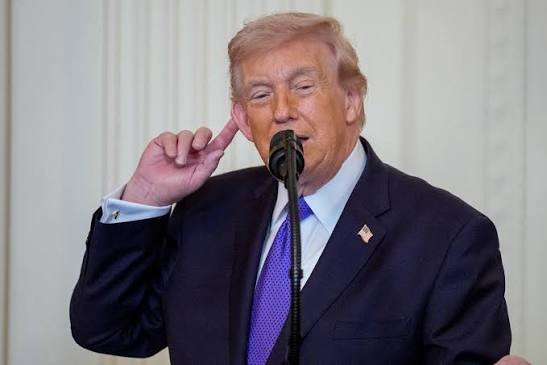
“It’s going to be ended soon, and if it starts up again they’ll be hit even harder,” Trump told a news conference in Florida, after telling lawmakers that the campaign would be a “short-term excursion.”
Iran’s Revolutionary Guards replied Tuesday that they, not the Americans, would “determine the end of the war”.
Trump’s remarks came on the first day in power for the 56-year-old son of slain leader Ali Khamenei, with Iranian forces launching a fresh wave of missile and drone attacks on Saudi Arabia, Bahrain, Qatar, the UAE and Israel.
Another missile was also fired at NATO member Turkey, the second such incident in five days, with the alliance’s air defenses intercepting it before it could reach its target.
Diplomatic efforts focused Monday on the highly strategic Strait of Hormuz, which has been blocked to nearly all oil tankers — sending shockwaves across the global economy.
French President Emmanuel Macron said his country and its allies were working on a “purely defensive” mission to reopen the strait, through which nearly 20 percent of the world’s crude oil usually transits.
The mission would aim to escort ships “after the end of the hottest phase of the conflict,” but experts say it would mean putting naval vessels at risk of fire from the nearby Iranian coast.
Kamal Kharazi, a foreign policy adviser to Iran’s supreme leader, told CNN that Tehran was calculating that economic pressure would eventually prompt other countries to intervene and end the war.