•As experts list implications •FG begins new phase •Transmission, distribution challenges persist — Prof Oke •Missed targets impose costs on homes, businesses, economy — LCCI •Economic growth, job creation will remain subdued — CPPE •Tinubu’s GAMCO raises concerns •Areas of conflict need to be resolved — PowerUp Nigeria
Despite the injection of €2.3billion (N3.7 trillion at current exchange rate), to the Presidential Power Initiative, PPI, the flagship electricity project has completely collapsed.
Vanguard learned that the five year project planned to ramp up Nigeria’s power output to 25,000 megawatts (MW) between 2020 and 2025 has formally closed, with power output failing to reach even 7,000 MW.
Under the €2.3 billion PPI, driven by FGN Power and executed by Siemens of Germany, the government set out a phased roadmap to boost generation, transmission and distribution to 7,000MW by 2021; 11,000MW by 2023, and finally 25,000MW by 2025.
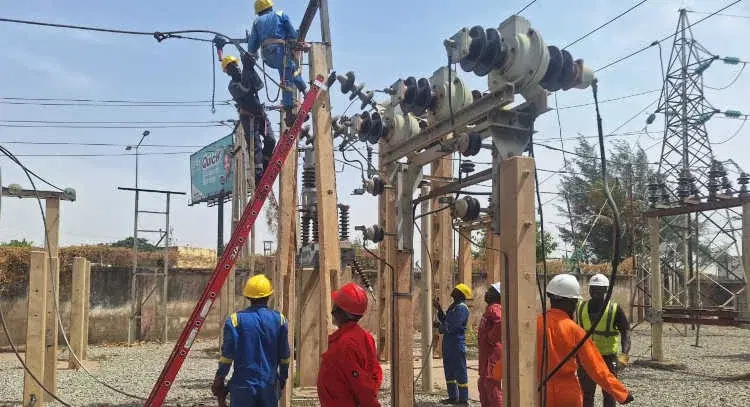
Latest data obtained from Nigerian Independent System Operator, NISO, responsible for promoting an efficient and reliable electricity transmission and market operation framework, indicated that the country still struggles to generate 5,000MW, transmit over 4,000MW and distribute about 3,000MW of power to a population of more than 200 million people.
Industry operators have indicated that some factors, especially poor infrastructure, high technical and commercial losses, weak metering penetration, and liquidity challenges have combined to undermine failure of the project.
They added that even where generation capacity existed on paper, often above 12,000MW installed capacity, actual available and dispatched power remains constrained by gas shortages, grid instability, and inadequate distribution networks.
Expect new projects in 2026 – FGN Power
However, FGN Power said: “Securing the financing arrangements was critical to enabling project commencement and the sustained execution of implementation activities.
“Although the process required extensive negotiations, and due diligence, it was deliberately undertaken with the necessary rigour to ensure the financing arrangements deliver optimal value for Nigeria.
“While administrative procedures and statutory approval timelines extended the pre-implementation phase, these processes were essential to ensure transparency, regulatory compliance, and the long-term sustainability of the project.
“Overall, the comprehensive financial negotiations and governance processes have positioned the project on a stronger and more resilient footing, safeguarding national interest while ensuring the delivery of enhanced value for money.
“PPI Phase 1 batch 1 projects include 3 substations (New Abeokuta, Ayede and Onitsha to be completed end of 2026. Sokoto and Offa will be completed end of 2027. These 5 substations will add additional wheeling capacity of 984MW to the transmission network.
‘’Under phase 1 batch 2 projects, contracts will be signed in May 2026. We are targeting the delivery of 12 substations to be completed by end of 2028.”
Transmission, distribution challenges persist — Prof Oke
However, in an interview with Financial Vanguard, a Prof of Energy Law in the University of Lagos, Yemi Oke, identified the transmission and distribution segments as still loaded with many challenges.
He said: “The weakest link has always been distribution. That is the segment that interfaces directly with consumers. It is where you have metering gaps, estimated billing, energy theft, bypasses, tariff collection challenges and huge commercial losses.
Most complaints from Nigerians are directed at the Electricity Distribution Companies, DisCos because they are the face of the sector. When there is electricity, people credit the DisCos; when there is no electricity, they blame the DisCos. But the problem is broader than that. Still, distribution remains the weakest link because it absorbs the shocks of the entire system.
“Transmission is a serious challenge. Frequent grid collapses, infrastructure weaknesses, vandalism of high-voltage lines, transmission losses, load rejection and power surges are all tied to the transmission segment.
“Nigeria’s transmission capacity has struggled around 5,000 megawatts. Attempts to push it higher often result in instability. The infrastructure under the Transmission Company of Nigeria is weak and, in many cases, obsolete.
“That is why I advocate de-emphasising excessive dependence on the national grid and focusing more on decentralised systems — mini-grids, embedded generation and regional grids. It makes little sense to generate electricity in one far corner of the country and transmit it across vast distances only to send it back near its source. That model is outdated.”
Missed targets impose costs on homes, businesses, economy — LCCI
On her part, Dr. Chinyere Almona, Director General/CEO, Lagos Chamber of Commerce & Industry, said: “Nigeria’s power sector targets under the Presidential Power Initiative, PPI, with Siemens for milestones of 7,000 MW by 2021; 11,000 MW by 2023; and 25,000 MW by 2025, were strategically designed to address Nigeria’s longstanding electricity deficit.
‘’However, despite these commitments, actual power delivered to consumers has remained significantly below projections, while the Transmission Company of Nigeria’s target of 20,000 MW wheeling capacity by 2020 was also not achieved. This gap between ambition and execution has had measurable consequences for economic performance.
“The missed targets have imposed substantial costs on the Nigerian economy. Businesses, particularly in manufacturing and services, continue to rely heavily on self-generated power using diesel and petrol generators.
This raises production costs, weakens competitiveness, and erodes profit margins. Small and medium-sized enterprises, which are major employers of labour, suffer disproportionately from power instability, leading to reduced productivity and limited expansion capacity.
‘’Furthermore, unreliable electricity discourages foreign direct investment, as investors typically prioritise economies with a predictable and affordable energy supply.
“Most recent events, such as the USA-Israel-Iran war, have already affected shipping prices and energy costs. With the closure of the Strait of Hormuz in the Middle East, oil production and shipments have been disrupted, which will naturally raise inflationary pressures in the coming days and weeks. Nigeria is not exempted from this impact.
“From a structural standpoint, the gap persists due primarily to weaknesses across the power value chain. Generation capacity alone does not guarantee electricity delivery without adequate transmission and distribution infrastructure.
‘’Transmission constraints frequently result in stranded generation capacity, while gas supply limitations continue to affect thermal power plants. In addition, commercial inefficiencies and weak cost recovery in the distribution segment undermine the sector’s financial sustainability and restrict reinvestment in critical infrastructure.
“Bridging these gaps requires a more integrated and execution-driven strategy. Priority should be given to strengthening the transmission network through targeted investments in grid expansion, modernisation, and system stability.
‘’Improving gas-to-power infrastructure is equally important, as a reliable gas supply is essential for optimal utilisation of existing power plants. These efforts must be complemented by regulatory reforms that promote transparency, enforce performance standards, and ensure that tariffs reflect economic realities while protecting vulnerable consumers.
“There is also a strong case for accelerating the deployment of decentralised and off-grid energy solutions, particularly in industrial clusters and underserved regions. Renewable energy and embedded generation can reduce pressure on the national grid and provide faster relief to productive sectors of the economy.
‘’At the same time, well-structured public-private partnerships are needed to mobilise long-term capital and technical expertise, with clear risk-sharing frameworks and predictable policy signals.
“Therefore, the failure to meet power sector targets is not merely a technical issue but a fundamental economic challenge. Reliable electricity remains a prerequisite for industrialisation, job creation, and economic diversification. While the targets were ambitious, they remain achievable if policy consistency, infrastructure investment, and private sector participation are effectively aligned.
“We have always recommended that a lasting solution to our overburdened national grid and the failures of the power sector is a gradual shift to renewable energy, along with states’ preparedness to generate and distribute power within their domains. To date, we have not been able to attract the investors needed to manufacture renewable energy equipment for the local economy.”
Economic growth, job creation will remain subdued — CPPE
Also, the Centre for the Promotion of Private Enterprise, CPPE, said in its reaction: “Productivity and industrialisation are strongly correlated with the power situation in any country. It is difficult to achieve high levels of productivity and, more importantly industrialisation, without adequate power supply. ‘’Therefore, no matter how well we perform in other areas, if we are still grappling with power problems, economic growth and job creation will remain subdued.
“Alternative sources of power are very expensive and not competitive. Business thrives on competitiveness. When firms rely on costly alternative energy sources, their production costs become very high.
‘’As a result, their products often become unaffordable for many Nigerians, creating affordability challenges and ultimately welfare concerns.
“For this reason, the importance of reliable power supply cannot be overemphasised. Now that several deadlines have been missed
‘’I must admit that there are political-economy issues around the sector, including the challenge of cost-reflective tariffs. However, at the very least, some fundamental infrastructure should have been put in place, as outlined under the Presidential Power Initiative, which clearly set out the expected progression in power delivery.
“If we truly want to transform the economy and achieve industrialisation, we must deliberately address the issue of power supply. While renewable energy has its place, when it comes to large-scale industrialisation, grid power remains the most cost-efficient and effective option. Therefore, the importance of grid electricity cannot be diminished in this conversation.
“The current power situation has caused significant setbacks for the economy. In fact, it raises serious questions about how Nigeria intends to compete under the African Continental Free Trade Area, AfCFTA.
‘’International trade is fundamentally about competitiveness. If we are not competitive, it will be difficult for Nigeria to benefit meaningfully from AfCFTA.
“Perhaps Nigeria may still have some advantages in the services sector, where the country has relative strengths. However, in terms of manufacturing and production, the country remains extremely weak. One of the major factors responsible for this weakness is the inadequacy of power supply, which continues to pose a major risk to productivity and economic growth.
“Government, therefore, needs to address critical issues in the sector, including governance, electricity pricing and a comprehensive clean-up of the system. There are still concerns about corruption, particularly within the Transmission Company of Nigeria, TCN, which remains government-owned.
“This raises the question of whether the current ownership structure should be reviewed in order to create a more efficient ecosystem. The sector needs to be driven by professionals who are dynamic, resourceful and forward-looking.
‘’These are the kinds of people required to effectively drive reforms and deliver sustainable progress in Nigeria’s power sector.”
Tinubu’s GAMCO raises concerns
Meanwhile, President Bola Tinubu weekend constituted an 11-member committee to incorporate the planned Grid Assets Management Company, GAMCO, following approval by the Federal Executive Council, FEC.
According to the President, the proposed company is expected to fast-track solutions to the endemic problems of stranded power, grid management and transmission in the nation’s power sector.
The Chief of Staff to the President, Femi Gbajabiamila, who performed the inauguration, said the committee was critical to the realisation of President Tinubu’s aspirations for the sector. He said: “The proposed establishment of GAMCO is one of the revolutionary steps taken by Mr. President and this administration in the all-important power sector.
“We are here for the inauguration of the Committee on the Grid Assets Management Company, which is basically to optimize and revolutionize power generation, particularly in the grid and transmission segment.”
He said the committee would conduct a comprehensive review of the existing laws, regulations, policies and institutional frameworks governing the electricity value chain, including generation, transmission, distribution and market operations.
Gbajabiamila added that the committee would also examine the implications of the Electricity Act 2023 and related unbundling arrangements on asset ownership, management and regulatory oversight.
According to him, the committee will identify areas of conflict, overlap or inconsistency between the proposed GAMCO framework and existing legal and regulatory instruments.
He also said the committee would assess the legal status, ownership structure and contractual obligations of the Niger Delta Power Holding Company and National Integrated Power Project assets, including the Omotosho, Olorunsogo and Ihovbor power plants, which GAMCO plans to use for its pilot phase.
In addition, the committee, he said, would evaluate the interface between GAMCO’s proposed mandate and the statutory functions of existing institutions in the power sector.
Gbajabiamila said the success of the pilot phase would lead to the development of a scalable model that could be extended across additional plants and transmission corridors, forming the backbone of long-term grid stabilisation and expansion.
He noted that substantial federal government’s investment in NIPP generation assets currently remained under-optimised due to operational inefficiencies and transmission evacuation bottlenecks, resulting in stranded capacity and sub-optimal returns on public capital.
He added: “GAMCO plans to unlock the stranded power from the three selected NIPP plants and develop a parallel high-capacity transmission corridor along the Benin–Lagos axis, thus translating underperforming national assets into reliably delivered megawatts.”
Areas of conflict need to be resolved — PowerUp Nigeria
However, in an interview with Financial Vanguard, the Executive Director of power advocacy group, PowerUp Nigeria, Adetayo Adegbemle, raised several concerns.
He said: “What is happening with the Presidential Power Initiative or FGN Power? Isn’t there an overlap of functions with GAMCO? What is the end goal of GAMCO?
“How will GAMCO interface with other stakeholders? If GAMCO is headed by the Chief of Staff, will it operate like a board, while a separate office handles its operation?
“How will GAMCO interface with the ministry of power? What powers exactly does this committee have? Is it advisory or executive? And where does the Nigeria Integrated Energy Plan fit into all of this?
“From all indications, the President does not appear to trust existing institutions to handle this assignment. There is need to ensure that role conflicts and possible overlaps are resolved as soon as possible.”