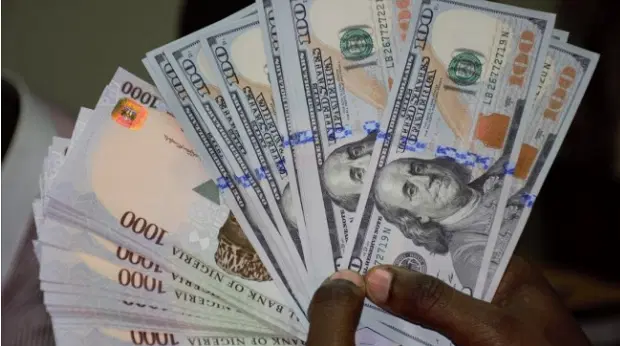
The Nigerian Naira began the new month on a note of cautious stability against the US Dollar on Monday, March 2, 2026. Real-time data from the Nigerian Foreign Exchange Market (NFEM) and informal trading desks indicate that the local currency is holding its recent gains as market participants react to a 13-year peak in foreign reserves and a sustained disinflationary trend.
Official Market Performance (NFEM)
In the official NFEM window, the Naira opened the trading week at 1,359.58 per dollar. By mid-morning, the rate showed marginal movement, touching a high of 1,360.00 before settling near 1,359.99 by 6:00 AM WAT. This reflects a slight adjustment from the closing rates seen at the end of February, as the market finds a new equilibrium following the Central Bank of Nigeria’s (CBN) recent 50-basis-point cut in the Monetary Policy Rate (MPR).
Market liquidity remains robust, with daily turnover figures supported by increased foreign portfolio inflows. The central bank’s commitment to a willing-buyer-willing-seller model continues to anchor the official rate, preventing the sharp intraday spikes that historically fueled market uncertainty.
The parallel market continues to shadow the official window closely, with the dollar exchanging at rates between 1,365 and 1,375 per dollar in major hubs like Lagos, Abuja, and Kano. The spread between the official and “black market” rates remains exceptionally narrow, currently holding at approximately 1%, a significant departure from the wide gaps seen in previous years.
Informal traders note that while Monday mornings typically bring a surge in demand from small-scale importers and travelers, the consistent supply through authorized channels has kept speculative pressure at bay. The convergence of rates suggests that the central bank’s transparency initiatives are effectively discouraging hoarding.
Key Macroeconomic Indicators
Several fundamental factors are supporting the Naira’s valuation as March begins:
Foreign Reserves Growth: Nigeria’s external reserves closed February at 49.51 billion dollars, up from 46.11 billion dollars in January. This substantial buffer provides the CBN with significant firepower to manage any sudden liquidity mismatches.
Inflationary Cooling: Headline inflation slowed for the tenth consecutive month, recorded at 15.10% in January 2026. This downward trend has bolstered investor confidence in the real value of the Naira.
Oil Production Stability: Crude oil production remains steady at approximately 1.46 million barrels per day. Combined with a recovering global oil price (Bonny Light averaging 71.87 dollars in February), this ensures a reliable stream of foreign exchange inflows.
Trade Surplus: Nigeria recently logged its largest trade surplus on record, further strengthening the current account and reducing the immediate pressure for currency devaluation.
Market analysts anticipate that the Naira will continue to trade within a range of 1,355 to 1,365 in the official window throughout the week, as the financial sector adjusts to the new interest rate environment and prepares for the next phase of the CBN’s stabilisation policy.