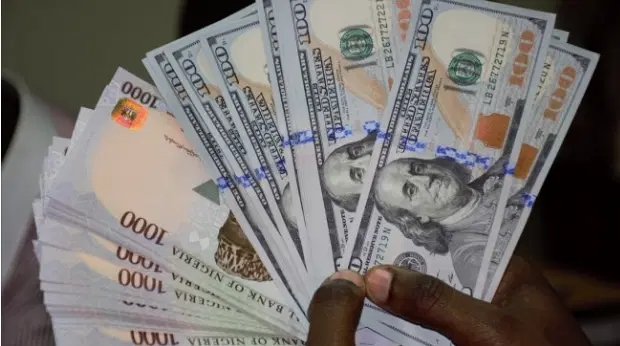
The Nigerian Naira maintained a stable yet cautious trajectory against the US Dollar in the early trading hours of Friday, February 20, 2026.
Data from the Nigerian Foreign Exchange Market (NFEM) and various informal channels indicate that the local currency is navigating a period of moderate volatility as the Central Bank of Nigeria (CBN) continues its efforts to harmonise rates across different market segments.
Official Market Performance (NFEM)
In the official window, the Naira opened at a rate of 1,344.74 per dollar. Market activity throughout the morning saw slight fluctuations, reaching a high of 1,345.58 before settling near 1,345.40 by mid-day. This stability follows a closing rate of 1,346.00 recorded at the end of the previous trading day, February 19.
The narrowing spread in the official market is largely attributed to improved liquidity inflows from international counterparties and the recent policy shift allowing Bureau De Change (BDC) operators to access up to 150,000 dollars weekly through authorized dealer banks. This move has been instrumental in easing the retail demand pressure that typically drives official rates upward.
Parallel Market Trends
In the parallel or informal market, the exchange rate continues to trade at a premium, though the gap remains significantly narrower than in previous years. As of this morning, the dollar is being exchanged at rates ranging between 1,360 and 1,365 per dollar, depending on the volume and location of the transaction.
Market analysts note that while the “black market” still commands a higher price due to immediate accessibility, the consistent supply in the NFEM has prevented the drastic spikes often seen during periods of scarcity. The current gap between the official and parallel market rates stands at approximately 15 to 20 Naira, a margin that monetary authorities are closely monitoring to ensure price discovery remains transparent.
Factors Influencing the Market
Several macroeconomic factors are providing a buffer for the Naira this week:
Crude Oil Production: Recent reports indicating an increase in Nigeria’s crude oil production to 1.46 million barrels per day have bolstered foreign reserves, providing the CBN with more firepower to intervene when necessary.
Monetary Policy: The Standing Deposit Facility and stable Open Repo Rates have helped manage naira liquidity, preventing an excess of local currency from chasing limited foreign exchange.
Institutional Inflows: Increased participation from institutional investors in the Nigerian equity market has also created a steady stream of foreign capital entering the economy.
As the trading day progresses, stakeholders expect the rate to remain within the 1,340 to 1,350 range in the official window, barring any significant global economic shifts or sudden changes in domestic policy.