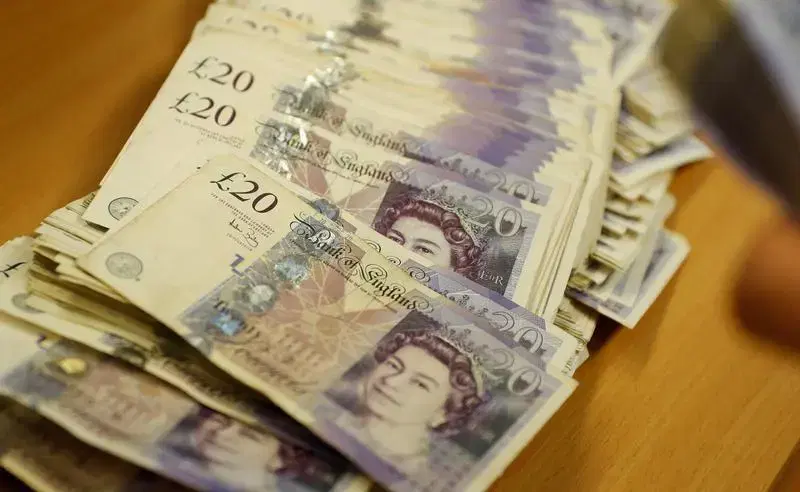
The British Pound has shown relative strength against the Nigerian Naira in early market sessions on Friday, February 20, 2026. Data from the Nigerian Foreign Exchange Market (NFEM) and informal trading corridors indicate that the Naira is facing renewed pressure from the Sterling, driven by shifts in global currency valuations and local demand for import financing.
Official Market Performance (NFEM)
In the official window, the Naira opened the day at 1,807.77 per Pound. Throughout the morning, the exchange rate experienced marginal volatility, peaking at 1,810.40 before stabilizing. By 7:00 AM WAT, the rate was quoted at approximately 1,808.86 per Pound.
This level represents a slight depreciation for the Naira compared to the closing figures of the previous week. Traders at the NFEM suggest that while liquidity remains present, the increased demand for the Pound for international service payments and academic remittances has kept the rate above the 1,800 threshold.
Parallel Market Trends
The parallel market continues to trade at a premium, though it remains closely shadowed by the official rate due to ongoing regulatory oversight. In the informal sector, the Pound is being exchanged at rates between 1,825 and 1,835 per Pound.
The “black market” spread remains narrow—roughly 1.5% to 2%—as Bureau De Change operators align their pricing with the central bank’s transparency initiatives. Analysts note that the relative stability in the parallel market is a sign that the extreme speculative spikes of previous years have largely been tamed, even as the local currency softens.
Factors Influencing the Market
Several key drivers are shaping the Pound-Naira trajectory this Friday:
Bank of England Policy: Hawkish signals from the Bank of England regarding interest rates have strengthened the Pound globally, making it more expensive against emerging market currencies like the Naira.
Foreign Reserve Cushion: Nigeria’s foreign reserves currently provide a moderate buffer, allowing the CBN to maintain a consistent, if slightly depreciating, exchange corridor.
Trade Demand: As the first quarter of 2026 progresses, Nigerian businesses are increasingly sourcing FX for equipment and raw materials from the UK, leading to a natural uptick in Sterling demand.
Market participants expect the rate to oscillate within the 1,805 to 1,815 range in the official window for the remainder of the trading day, pending any significant interventions or external economic data releases.