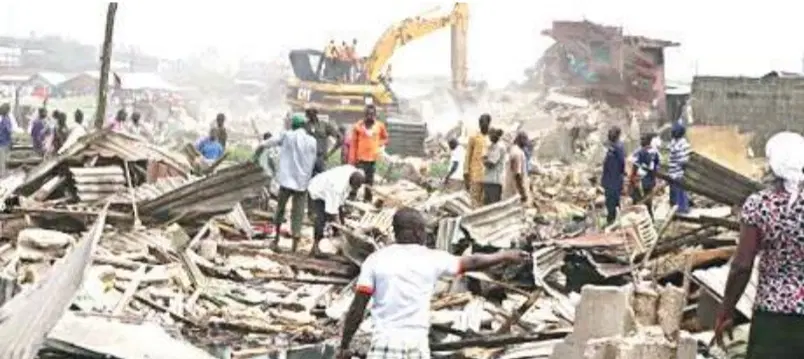
Recent demolition exercises in some parts of Lagos State, especially Makoko, have not only led to thousands of people being rendered homeless, but many students having no where to continue their education, at least for the time being. According to figures from community leaders and school owners in the community, no fewer than1,000 children have been driven out of their schools, which are mostly private-owned. The area is one of those underserved in terms of education facilities.
Read Also: ‘We’re not demolishing all of Makoko,’ Sanwo-Olu defends action
A school owner, who preferred anonymity, captured the situation thus: “The demolition exercises in Makoko, Ekun-Agbo and Shogunro communities have forced over 1,000 children to stop school. As I am speaking with you, only 50 out of over 500 in my school resumed. This is because many have relocated, many are homeless now, with many abandoning school due to the trauma of the demolitions.”
The tension of the demolition of homes and properties in the Makoko waterfront community and its environs may be going down. However, the impact, especially on the lives of school children, may long be felt.
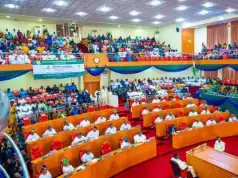
Recall that on Tuesday, at a stakeholders’ meeting of members of the Lagos State House of Assembly with victims of the demolition exercises in the above areas, the House mandated all demolitions to stop.
Chairman of the ad-hoc committee set up by the Speaker, Rt. Hon. Mudashiru Obasa, Hon. Noheem Adams, disclosed that the resolution of the meeting was to direct the state government to halt further demolition activities until further notice.
Reading out the committee’s resolution after the stakeholders’ meeting at Alausa, Ikeja, Adams, who is also the Leader of the House, said: “On behalf of the Speaker of the Lagos State House of Assembly, Rt. Hon. Mudashiru Obasa, and all the 40 members of the House, we are directing that all ministries should stop work on all demolitions. I repeat, all demolitions in Makoko, Oko-Agbon and Shogunro communities should stop from today until further notice.
“We also want to see the list of the task force that was constituted because we want residents to be duly involved and carried along. There should be a clear schedule and criteria for those involved.
“Our children may not come back to class again”
Speaking on the effects the demolition has had on members of the community, especially school children in Makoko, a school owner who does not want his name in print noted that apart of the trauma of her exercise on the children, many have left the area with their parents, while some are even sleeping on canoes on the lagoon with family members.
Speaking further, the school owner who provides tuition-free education for children in the community, explained: “About five schools in Makoko were affected by the demolition, and one in Shogunro. More than 1,000 children were affected.”
Stakeholders speak on the impact of the demolition
For an advocate for sustainable education, Ben Ugbana, demolitions in Makoko and environs would increase the alarming number of out-of-school children, especially in underserved communities.
His words: “ I personally have a problem with anything that leads to the closure of schools or that forces schoolchildren back into the streets. This was my first thought when the news of the Makoko demolition reached my screen.
“Sadly, it will now be much harder to convince those children to return to school, because it is very easy for the academic zeal of business-minded children to be quenched. School owners will have to dedicate a lot of time and resources to ensure the kids return to formal learning. But yes, they will eventually begin to enjoy schooling again after a while.”
“As for the NGOs, whatever support they need right now should be given to them, especially by the government. We must appreciate their good works so they are encouraged to do more.
“Meanwhile, kudos to the Lagos State Government for listening to reason and halting the demolition of Makoko. But I sincerely hope we can grow to a point where we act more proactively as a nation and do things more properly.”