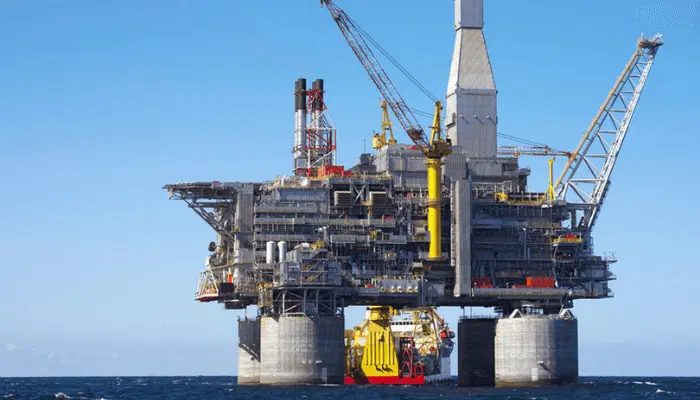
The Federal Government has called on International Oil Companies (IOCs) operating in Nigeria to take decisive action toward ramping up crude oil production, as the country pursues its ambitious goal of producing 2.5 million barrels per day by 2027.
Nigeria’s average daily oil production stood at about 1.6 million barrels per day in 2025, well below the budget benchmark of 2.06 million barrels per day, according to official data.
Speaking at the closing session of a panel discussion during the ongoing 2026 Nigerian International Energy Summit (NIES) in Abuja, the Minister of State for Petroleum Resources (Oil), Senator Heineken Lokpobiri, said the government had put in place policies and incentives to create a more enabling environment for oil companies to operate efficiently.
Lokpobiri emphasized that the performance of the nation’s oil and gas industry — and by extension, the broader economy — depends heavily on the success of upstream operators.
“The success of the oil and gas industry is largely dependent on the success of the upstream. From upstream to midstream and downstream, everything is connected. If we don’t produce crude oil, there will be nothing to refine or distribute,” he stated.
The minister reaffirmed the government’s commitment to treating all operators — both indigenous and international — equally under the Petroleum Industry Act (PIA), noting that the law provides a level playing field for all participants.
“There is no discrimination between indigenous producers and international operators. You are all companies working under the same laws and regulations,” he said. “Our expectation is that we continue to collaborate and strengthen the upstream sector for the benefit of all Nigerians.”
Lokpobiri added that the Federal Government has already introduced several reforms, including tax reliefs and regulatory adjustments, to stimulate investment and boost production capacity.
“We have provided extensive incentives to unlock the sector’s potential. The question now is: what will you do in return? The government has given a lot — it’s time for industry players to reciprocate by investing, producing, and delivering results,” he charged.
The minister reiterated that the administration of President Bola Ahmed Tinubu remains committed to restoring Nigeria’s oil output and ensuring that the sector once again serves as a major driver of foreign exchange earnings and economic stability.