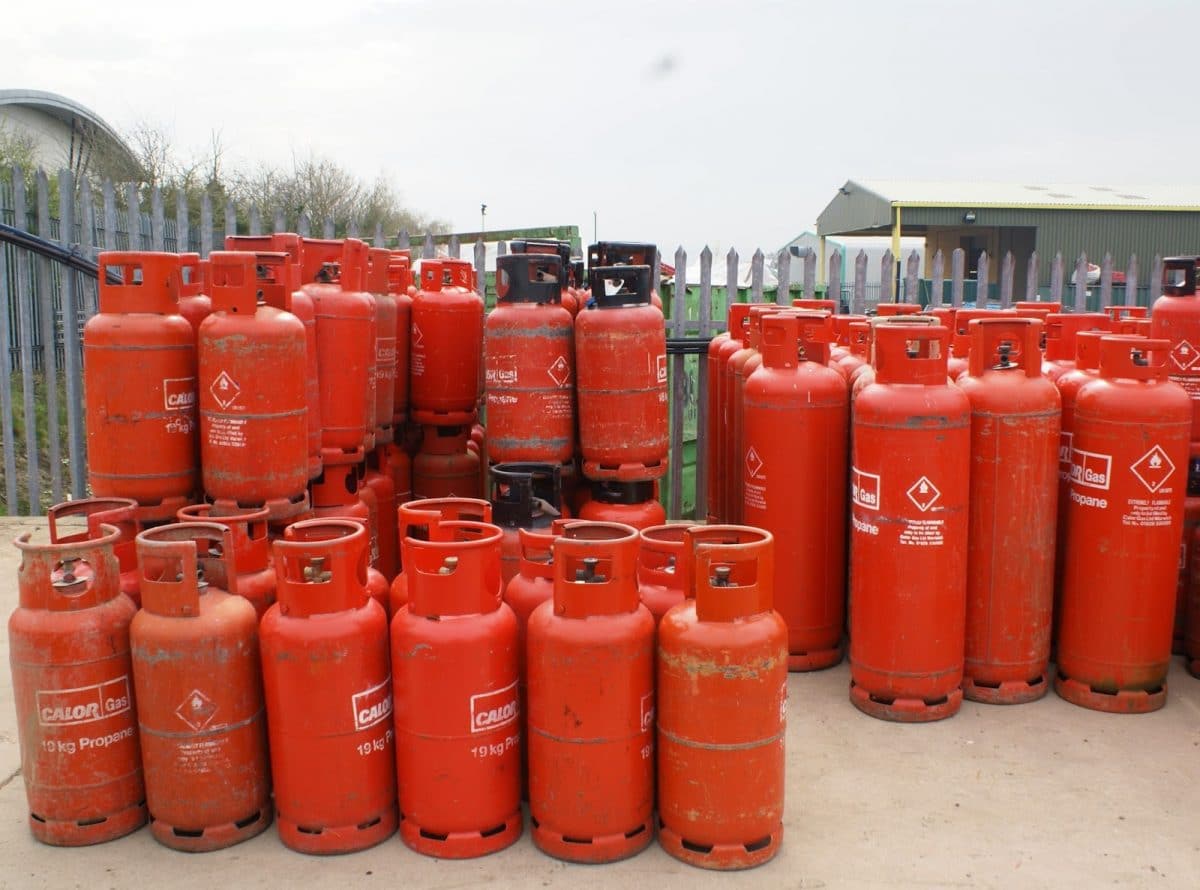
Nigerian households enjoyed some relief in December 2025 as prices of petrol and cooking gas dropped year-on-year, signalling a gradual easing in energy costs, according to the latest data released by the National Bureau of Statistics (NBS).
The NBS reports showed that both Liquefied Petroleum Gas (LPG) — commonly used for cooking — and Premium Motor Spirit (PMS) — known as petrol — recorded significant price declines compared to December 2024, alongside modest reductions on a month-to-month basis.
While the trend reflected broad-based declines across most states and regions, the Bureau noted that price variations by location remain pronounced nationwide.
Cooking Gas Prices Slide Further
According to the NBS, the average cost of refilling a 5kg cylinder of cooking gas dropped by 1.20% month-on-month, from ₦5,425.78 in November 2025 to ₦5,360.43 in December 2025.
Year-on-year, the price declined sharply by 25.31%, compared to ₦7,177.27 in December 2024.
At the state level, Kaduna recorded the highest average price for refilling a 5kg cylinder at ₦5,838.66, followed closely by Jigawa (₦5,825.09) and Osun (₦5,777.80). Katsina had the lowest price at ₦4,855.80.
Similarly, the average price for refilling a 12.5kg cylinder of LPG fell by 0.74% month-on-month, from ₦13,538.79 in November 2025 to ₦13,438.90 in December 2025.
On a yearly basis, the 12.5kg cylinder price dropped by 22.20%, down from ₦17,274.16 recorded in December 2024.
State-by-state analysis showed Abia leading with the highest average price at ₦14,489.96, followed by Osun (₦14,444.50) and Delta (₦14,393.17).
Petrol Prices Also Decline
The Bureau also reported that the average retail price of petrol fell to ₦1,048.63 per litre in December 2025, marking an 11.81% year-on-year decrease from ₦1,189.12 recorded in December 2024.
On a month-to-month basis, the price slipped by 1.20%, from ₦1,061.35 in November 2025.
Further analysis showed Kogi State had the highest average petrol price at ₦1,104.45, while Oyo State recorded the lowest at ₦996.55.
Regionally, the North-East emerged as the most expensive zone, whereas the South-West recorded the lowest overall average for petrol prices.