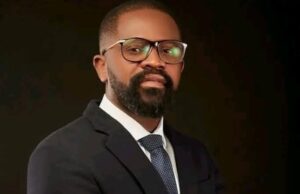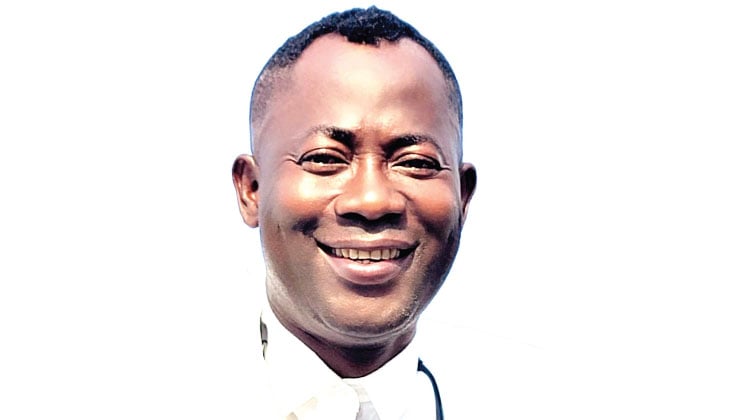
A Professor of International Relations and Strategic Studies at Lagos State University (LASU), Adewunmi Falode, has called for a constitutional amendment to introduce a single, non-renewable seven-year term for elected public officials in Nigeria.
Falode made the proposal on Tuesday while delivering LASU’s 115th inaugural lecture titled “Bespoke Solutions: Reimagining, Reifying and Realigning the Wheels of the Nigerian State” at the university’s Buba Marwa Auditorium.
He argued that Nigeria’s current two-term, four-year system is “wasteful” and contributes to political instability, noting that it leaves little room for effective governance due to election-related distractions. “Most officeholders barely enjoy five months of undistracted governance before being entangled in post-election petitions and preparations for the next polls,” he said.
Falode cited examples of countries such as Mexico and the Philippines, which operate single six-year tenures, adding that a seven-year model in Nigeria would guarantee at least four years of stable governance, one year for electioneering, and two years for resolving disputes.
He joined other prominent Nigerians—Governor Seyi Makinde, former Governor Peter Obi, economist Pat Utomi, legal luminary Wole Olanipekun (SAN), and ex-Senate Deputy President Ike Ekweremadu—who have similarly advocated single-term limits.
The scholar described Nigeria’s democracy as “elitist, exclusionary, and divisive,” criticizing the enormous funds spent on elections. He cited budget figures showing a sharp rise in election spending—from ₦1.5 billion in 1999 to ₦242.2 billion in 2022—excluding post-election litigation costs.
Falode also called for what he termed “competitive federalism,” urging the decentralization of power to strengthen states and enhance development. He clarified that his proposal was not a push for regionalism but a call for a restructured federal system that allows states to function autonomously within agreed frameworks.
According to him, “Nigeria must customise its federalism to correct the fractures in its governance system. A weak centre and strong states will drive unity and equitable development.”
He commended President Bola Tinubu for his efforts toward fiscal federalism through the 2025 Tax Reforms Bill, describing it as a step toward equitable revenue distribution and state-level innovation in governance.
On national unity, Falode identified education as the most vital tool for integration and peacebuilding. He urged the government to make primary and secondary education free and compulsory, arguing that widespread education would curb extremism and foster civic responsibility.
“Education is the key wheel of national integration,” he said. “When citizens are educated, they resist manipulation and contribute meaningfully to development.”
Falode traced Nigeria’s persistent instability to its colonial history and failure to fully embrace federalism after independence. He argued that if post-independence leaders had faithfully implemented a decentralized system, the nation would have avoided many of its political and economic challenges.
The lecture was attended by several dignitaries, including the Olota of Ota, Oba Abdulkabir Obalanlege; LASU Vice-Chancellor, Prof Ibiyemi Olatunji-Bello (represented by DVC Academics, Prof Taiwo Afisi); the university’s Registrar, Emmanuel Fanu; and the Managing Director/Editor-in-Chief of PUNCH Newspapers, Mr. Joseph Adeyeye.