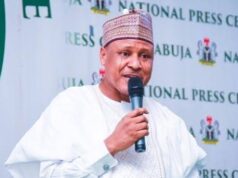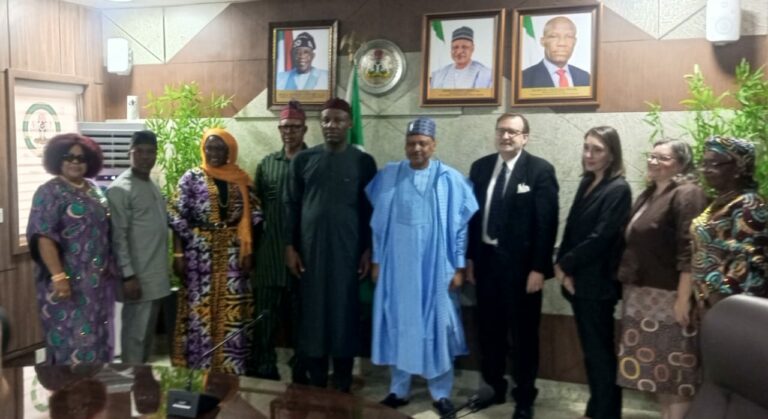
The United States Ambassador to Nigeria, Ambassador Richard Mills, and the Minister of Information and National Orientation, Idris Mohammed, on Friday addressed the recent changes to US visa policies and jointly called for increased awareness and compliance among Nigerian citizens.
The US had earlier imposed tighter visa restrictions on Nigerians. It revised its visa reciprocity schedule for Nigeria, limiting the validity of certain non-immigrant visas — including B1/B2 (business and tourism), F (student), and J (exchange visitor) categories — to just three months with single-entry access.
Speaking during a press briefing in Abuja, Mills clarified that the new visa measures announced by the US Mission are not punitive, but rather part of a global effort to tighten security, enhance service delivery, and ensure compliance with US immigration laws.
“Myself and the minister just had a very useful and productive discussion about US visa laws and how to communicate to the Nigerian people the importance of compliance with US visa laws,” Mills said.
The envoy underscored the enduring and strategic relationship between the two countries, emphasising that the US continues to welcome Nigerians for study, business, tourism, medical visits, and family reunions—but with the clear expectation that visitors respect visa regulations.
“Let me be clear, the United States values its very strong relationship with Nigeria and the many kinds of connections that exist between our two countries.
“US visas play a vital role in keeping these countries going and strengthening them
“Both governments want visitors to respect our national laws and regulations,” the ambassador said.
Mills warned that visa misuse—such as overstaying or providing inaccurate information—undermines trust and can lead to severe personal consequences, including deportation or a lifetime travel ban.
“If you overstay, it can result in deportation and a lifetime ban on future travel to the US, which we don’t want to see Nigerian citizens face,” he said.
He urged applicants to be honest and transparent, stressing that “visa compliance is a cornerstone of mutual trust and respect between our two nations.”
Addressing concerns about the processing system, Mills revealed that the recent changes reflect the US administration’s security-focused review of global visa operations.
He noted that the US government requires more rigorous background checks, including access to Nigerian criminal records, to ensure applicants are properly vetted.
“We needed to address some of the security vulnerabilities that we saw in our visa processing.