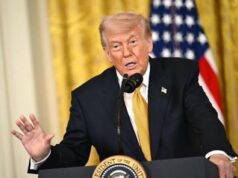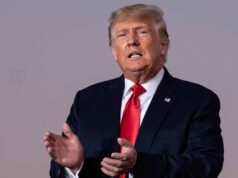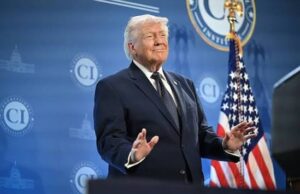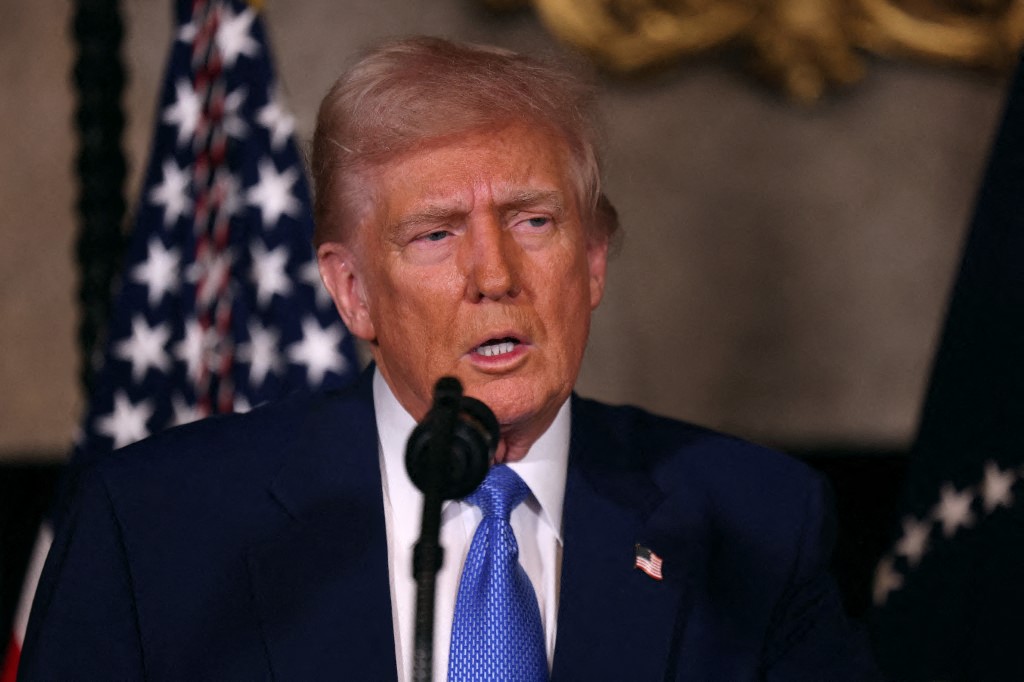
U.S. President Donald Trump is set to host five African heads of state for a White House lunch on Wednesday, with trade and commerce expected to be central to the discussions among a broader range of possible topics.
The presidents of Senegal, Liberia, Guinea-Bissau, Mauritania, and Gabon—five West African nations along the Atlantic coast—will gather at Trump’s invitation.
Officials from these countries told AFP they anticipate the talks will focus on “trade, investment, and security, amongst other topics” during their meeting in the State Dining Room of the White House.
However, few concrete details have been disclosed about the administration’s exact intentions.
The meeting comes at a time when the Trump administration remains focused on tariffs and trade agreements, alongside its push to secure a steady supply of critical minerals.
Yet, unlike resource-rich countries such as the Democratic Republic of Congo, these five African nations lack significant mineral reserves.
This gathering also follows closely after the Trump administration marked the official closure of USAID, the U.S. foreign aid agency, portraying the move as an end to the “charity-based model.”
Officials from the African nations appear to be mindful of the administration’s approach.
Liberian President Joseph Boakai accepted the invitation with an understanding that his country seeks to move beyond foreign aid dependency.
“No longer being ‘solely (an) aid recipient,’” his press secretary Kula Fofana told AFP on Tuesday.
“Our interest is to look more to trade and engagement partners who will invest,” she said.
Gabonese presidential spokesman Theophane Biyoghe noted that the lunch presented an opportunity for economic cooperation “centered around the industrialization of our economy.”
– Competition and security –
The backdrop to the meeting includes intensified geopolitical competition in the region, with China and Russia both expanding their influence.
Beijing has invested heavily in several countries across West Africa, while Moscow has offered backing to the Alliance of Sahel States (AES)—a bloc comprising Mali, Burkina Faso, and Niger, all of which are ruled by military juntas.
The AES countries share borders with several of the nations attending Wednesday’s lunch, raising the likelihood that regional security and drug trafficking will be on the agenda.
In April, Guinea-Bissau handed over four convicted Latin American drug traffickers to U.S. authorities. The country has long served as a cocaine transit point between Latin America and Europe.
Just before departing for Washington, Guinea-Bissau President Umaro Sissoco Embalo called the visit “very important” for his country.
“Economically, this is a great opportunity opening for us,” he said, expressing hopes that his country would also benefit from “the support” the United States extends to other nations.
– Precarious visits –
Not all White House visits by world leaders have gone smoothly.
Ukrainian President Volodymyr Zelensky found himself caught in a political controversy during a visit with Trump, while South African President Cyril Ramaphosa endured an awkward encounter when Trump showed him a video promoting unfounded claims of a “white genocide” in South Africa.
Unlike those highly publicized Oval Office meetings, the five African presidents attending Wednesday’s lunch are not scheduled for any press appearances.
White House Press Secretary Karoline Leavitt offered little insight into the event, stating only that Trump would “host leaders of five African nations for lunch” in the State Dining Room.
Additionally, according to an internal memo from last month, Gabon, Liberia, Mauritania, and Senegal are among 36 countries reportedly being considered for inclusion in a potential expansion of the U.S. travel ban.
— AFP