More than 14 million of the world’s most vulnerable people — including over 4.5 million young children — could die by 2030 due to drastic cuts in U.S. foreign aid, according to a new study published Tuesday in The Lancet.
The research comes as global and business leaders convene in Spain this week for the largest aid-focused UN conference in a decade.
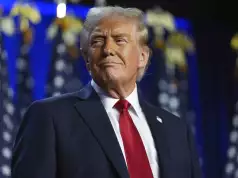
The study highlights the devastating impact of the Trump administration’s decision to scale back the U.S. Agency for International Development (USAID), which had previously accounted for over 40% of global humanitarian assistance. Trump returned to the White House in January, and just weeks later, his close advisor Elon Musk, now the world’s richest man, declared he had put USAID “through the woodchipper”.
Co-author Davide Rasella of the Barcelona Institute for Global Health (ISGlobal) warned that the funding cuts could abruptly halt — and even reverse — two decades of health progress in low- and middle-income countries.
“For many nations, the shock would be comparable to a pandemic or a major armed conflict,” Rasella said.
USAID’s Life-Saving Impact
The research, based on data from 133 countries between 2001 and 2021, found that USAID programmes helped prevent an estimated 91.8 million deaths — more than those recorded in World War II.
The team also modelled the effects of the 83% aid cut announced by the U.S. government earlier this year. Their projections showed that more than 14 million additional deaths could occur by 2030 if the current trajectory continues. This includes about 700,000 child deaths annually — a figure that surpasses the total military deaths during World War I.
USAID-supported programmes were linked to a 15% reduction in overall mortality. Among children under five, that figure jumped to 32%. The study found particularly sharp declines in preventable deaths from diseases like HIV/AIDS, malaria, and neglected tropical diseases. Countries receiving strong USAID support had 65% fewer HIV/AIDS deaths and about 50% fewer deaths from malaria.
Francisco Saute of Mozambique’s Manhica Health Research Centre, another co-author, underscored how U.S. aid has helped combat major diseases.
“Cutting this funding doesn’t just risk lives — it dismantles health infrastructure that’s taken decades to build,” he said.
A real-time tracker by Boston University disease modeller Brooke Nichols estimates that since the cuts, more than 332,000 people — including over 224,000 children — have already died. That equates to roughly 88 lives lost every hour.
Global Ripple Effect
The U.S. withdrawal from foreign aid has prompted other major donors, including France, Germany, and the UK, to announce similar cuts. Co-author Caterina Monti warned this could lead to “even more additional deaths” globally if the trend continues, particularly across the European Union.
However, researchers emphasized that the bleak projections are based on current funding levels — and could change if aid is restored or expanded. Dozens of world leaders are meeting this week in Seville, Spain, to discuss exactly that. Notably, the United States is not attending.
“Now is the time to scale up, not scale back,” Rasella urged.
Before the cuts, USAID’s entire budget made up just 0.3% of U.S. federal spending. “The average American contributed about 17 cents a day — around $64 a year — to USAID,” said co-author James Macinko of UCLA.
“If people understood how far that small contribution goes in saving lives, I believe many would support continuing this investment.”