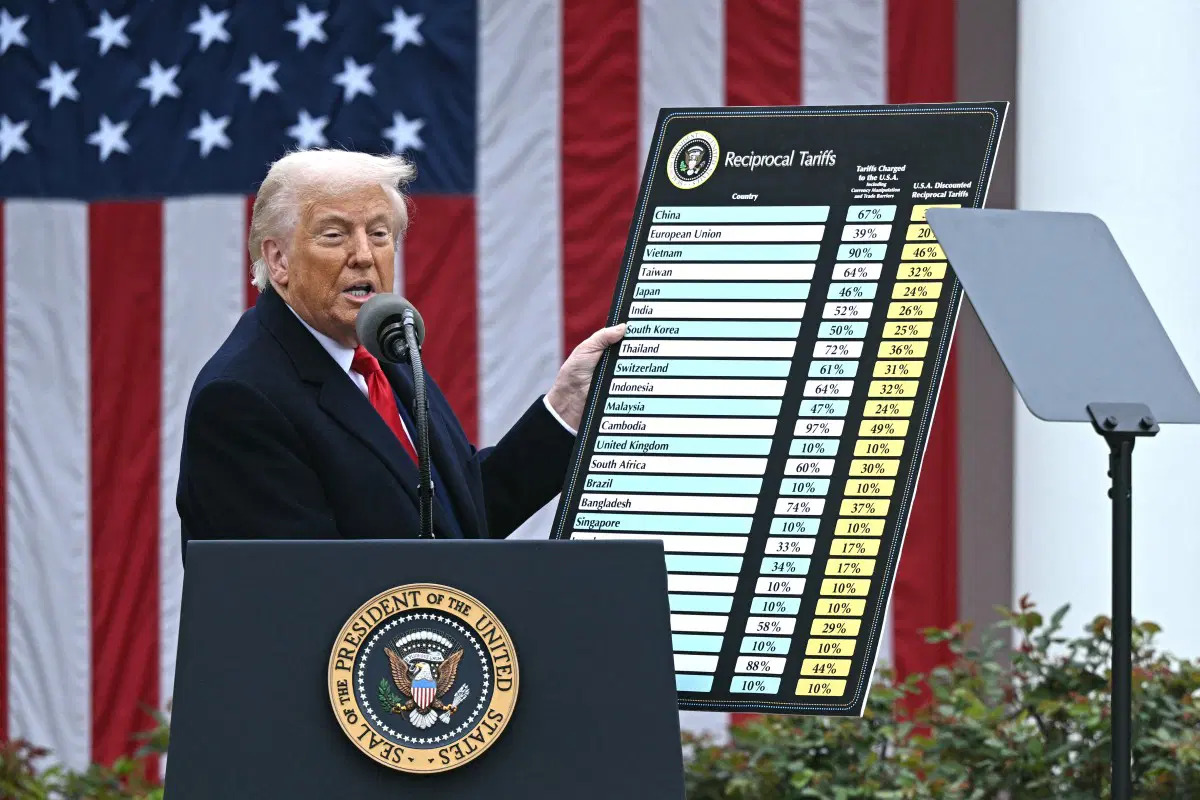
US President Donald Trump received a temporary legal boost for his hardline trade strategy on Thursday, as an appeals court issued a stay that allows his sweeping import tariffs on China and other nations to remain in place—for now.
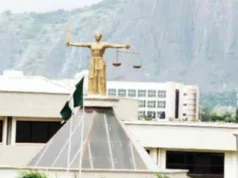
The decision provides short-term relief for the administration after the US Court of International Trade ruled on Wednesday that Trump had overstepped his authority by imposing many of the tariffs since taking office. The trade court’s decision barred most of the duties, citing executive overreach.
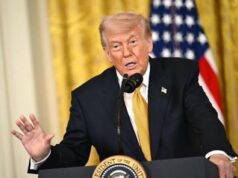
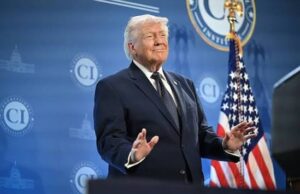
Welcoming the development, Trump criticized the Manhattan-based trade court, calling it “horrible” and stating its ruling should be “quickly and decisively” reversed for good.
Meanwhile, US Treasury Secretary Scott Bessent acknowledged that trade negotiations were faltering and hinted that direct intervention by Trump and Chinese President Xi Jinping might be necessary. “I think that given the magnitude of the talks, given the complexity, that this is going to require both leaders to weigh in with each other,” Bessent told Fox News after the appeals court’s administrative stay.
Earlier this month, Washington and Beijing agreed to a 90-day pause on their escalating tariff battle after high-level discussions in Geneva—an unexpected thaw in the ongoing trade war between the world’s two largest economies.
Since returning to the presidency in January, Trump has ramped up efforts to rework US trade relationships, frequently using tariffs as leverage to push countries toward renegotiating terms more favorable to American interests. However, the unpredictable rollouts have unsettled markets and disrupted supply chains.
Prior to Thursday’s decision, the Trump administration had been given 10 days to halt the affected tariffs.
Calling the trade court’s earlier ruling “blatantly wrong”, the administration expressed confidence that the appeals process would ultimately vindicate its position. White House spokeswoman Karoline Leavitt told reporters that the judges “brazenly abused their judicial power to usurp the authority of President Trump.”
She added that the Supreme Court “must put an end” to the tariff challenge while noting that Trump retained “other legal means” to impose such levies.
In a separate legal setback, a federal district judge in Washington ruled that some of Trump’s tariffs were also unlawful, giving the administration 14 days to appeal.
Despite the legal turbulence, Trump officials insisted that the broader trade agenda would stay on course. Kevin Hassett, director of the National Economic Council, told Fox Business that “hiccups” caused by “activist judges” would not derail ongoing negotiations and added that three deals were nearing completion.
Trump’s trade adviser Peter Navarro echoed this sentiment, saying the appeals court’s stay had not diminished interest from US trading partners. He claimed the administration had received “plenty of phone calls from countries” that would continue to “negotiate in good faith”, though he did not name any specific nations.
The administration argues that the tariffs are necessary to address trade imbalances and what Trump describes as a “national emergency” tied to deficits and cross-border drug smuggling—justifications the trade court has challenged. Trump initially announced broad-based tariffs in April, starting at a 10 percent baseline and targeting nearly all US trading partners, including specific escalations against China, the EU, Canada, and Mexico.
The trade court ruling struck down these sweeping measures, including those applied under emergency powers, but left intact 25 percent tariffs on imports of autos, steel, and aluminium.
China, which had faced additional 145 percent tariffs before they were temporarily lowered to facilitate negotiations, reacted to the court’s ruling by urging Washington to abandon the tariffs altogether.
“China urges the United States to heed the rational voices from the international community and domestic stakeholders and fully cancel the wrongful unilateral tariff measures,” said commerce ministry spokeswoman He Yongqian.
The court’s decision emerged from two separate lawsuits filed by businesses and a coalition of state governments, who argued that President Trump had overstepped Congress’s exclusive power over federal spending.
In their opinion, the judges emphasized the constitutional stakes, stating that any reading of the 1977 International Emergency Economic Powers Act (IEEPA) that “delegates unlimited tariff authority is unconstitutional”.
Analysts at the London-based Capital Economics said the matter could ultimately reach the Supreme Court, but even that outcome was unlikely to bring the trade war to a close.