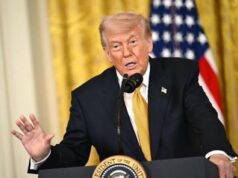
South Africans expressed anger on Thursday over former U.S. President Donald Trump’s continued promotion of false claims about a so-called genocide targeting white farmers in South Africa. The remarks resurfaced during a meeting between Trump and President Cyril Ramaphosa held on Wednesday.
The meeting, aimed at mending strained diplomatic ties since Trump’s 2017 inauguration, followed months of tension over threats of high trade tariffs and the expulsion of South Africa’s ambassador from Washington.
“I am not happy,” said university student Nicole Mbhele. “He made it seem like we want to kill white people or white farmers for our land or want it back.”
During the session, a video was played showing a fringe opposition leader singing a struggle-era song about “killing” white farmers — a clip that appeared to reinforce Trump’s narrative. He also repeated unfounded allegations that the South African government was forcibly taking land from white Afrikaners — a minority group that owns a significant portion of the country’s farmland.
“Donald Trump does not have facts about what is happening in South Africa,” said 25-year-old saleswoman Naledi Morwalle. “He was making false accusations about our country.”
The meeting was widely followed live on South African television, with many viewers expressing support for the South African delegation, which included four cabinet ministers and two well-known golfers.
Some critics felt President Ramaphosa should have more forcefully rejected Trump’s claims of a so-called “white genocide”. However, others praised his composed rebuttal, particularly when he stressed that Black South Africans suffer the most from the country’s high crime rate.
“I think our country did well and put the facts out there,” said activist Ulrich Steenkamp. “Whether the world responds is up to them.”
Analyst Thelela Ngcetane-Vika of the Wits School of Governance observed that while Ramaphosa began the meeting calm and diplomatic, the controversial video played during the session clearly unsettled him.
“In the first half of the session, President Ramaphosa was very well prepared, poised as a statesman, diplomatic… But when that video played, you could see his voice language change, he became uneasy,” she said.
Ngcetane-Vika added that Ramaphosa could have strengthened his rebuttal by presenting statistical evidence to counter the misinformation.
Meanwhile, Afrikaans father Authur Williams noted that the long-term impact of the talks would depend on whether the two nations can secure mutual trade benefits.
“I sincerely hope that economically we will come to an agreement where it’s mutually beneficial and there are economic benefits for both parties,” he told AFP.