The World Health Organization (WHO) is facing a salary shortfall exceeding $500 million for the upcoming biennium, prompting significant cost-cutting measures across the organization, according to its Director-General, Dr. Tedros Ghebreyesus.
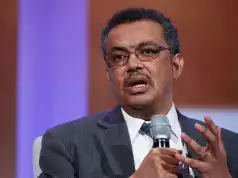
Speaking at the high-level welcome of the 78th World Health Assembly in Geneva on Monday, Dr. Ghebreyesus outlined the financial constraints and organizational restructuring underway. This year’s Assembly is themed “One World for Health” and brings together delegations from all WHO member states to address pressing global health issues.
Dr. Ghebreyesus acknowledged progress made by the organization but highlighted the looming financial gap.
“This week, I ask you to approve the next increase to make another step towards securing the long-term financial sustainability and independence of your WHO. Already, the first increase has made a huge difference. If it had not happened, our current financial situation would be much worse—$300 million worse,” he said.
Despite these gains, he revealed:
“Even so, we are facing a salary gap for the next biennium of more than $500 million. The secretariat has taken a range of measures to curtail costs in travel, procurement, recruitment, early retirement, and more. These measures have helped to narrow the gap, but still, there is no alternative but to reduce the size of our workforce.
“We are doing this reduction carefully to protect the quality of our work and ensure that we are positioned to emerge from this crisis stronger, more empowered, and more independent. As you know, we have been engaging in a major structural realignment, guided by an in-depth analysis of priorities, deliberate and conscious.”
Dr. Ghebreyesus explained that the restructuring effort includes streamlining WHO’s headquarters operations with a new, more efficient framework:
“The prioritization exercise has informed the development of a new streamlined structure for headquarters, which reduces the executive management team from 14 to seven and the number of departments from 76 to 34.
“Some member states called the new structure ‘lean and mean.’ I think it’s more focused, and it could be more impactful as well.
“Last week, I announced our new executive management team, and in the coming weeks, we will decide which directors will lead which departments.
“This was an extremely difficult decision for me, as it is for every manager in our organization who is having to decide who stays and who goes.”
He extended appreciation to the outgoing executive management team — Dr. Mike Ryan, Dr. Samira Asma, Dr. Bruce Aylward, Dr. Catharina Boehme, Dr. Li Ailan, and Dr. Jérôme Salomon — for their years of service.
However, the WHO chief warned about the implications of the reduced workforce:
“Let’s be clear: a reduced workforce means a reduced scope of work. The organization simply cannot do everything member states have asked it to do with the resources available.”
He also addressed budget adjustments, noting:
“This week, you will consider a reduced programme budget of $4.2 billion for the 2026-2027 biennium. This represents a 21 percent reduction on the original proposed budget of $5.3 billion.
“Assuming you approve the increase in assessed contributions, and thanks to the investment round, we are confident that we have already secured more than $2.6 billion, or 60 percent of the funding for the next biennium. That leaves an anticipated budget gap of more than $1.7 billion. We know that in the current landscape, mobilizing that sum will be a challenge.”
The remarks underscore the financial and operational challenges the WHO faces even as it seeks to maintain its critical global health functions amid mounting fiscal pressures.